World News
US Strikes Iran’s Qeshm Island After Missile Launches Toward Kuwait and Bahrain; Regional Tensions Escalate
The United States has launched military strikes on Iran’s Qeshm Island after Tehran allegedly fired missiles toward Kuwait and Bahrain, marking a significant escalation in tensions across the Middle East.

The United States has launched military strikes on Iran’s Qeshm Island after Tehran allegedly fired missiles toward Kuwait and Bahrain, marking a significant escalation in tensions across the Middle East.
According to the US Central Command (CENTCOM), the Iranian missiles either failed to reach their targets or were intercepted before causing damage. The US military subsequently carried out strikes on what it described as an Iranian military ground control facility located on Qeshm Island near the strategically important Strait of Hormuz.
Iranian Missiles Target Gulf Region
US officials stated that two missiles launched toward Kuwait disintegrated during flight and never reached their intended destination. Meanwhile, missiles aimed at Bahrain were successfully intercepted by US and Bahraini defense forces.
The incident has further heightened concerns about regional security, especially as the Strait of Hormuz remains one of the world’s most critical energy transit routes.
US Targets Facility on Qeshm Island
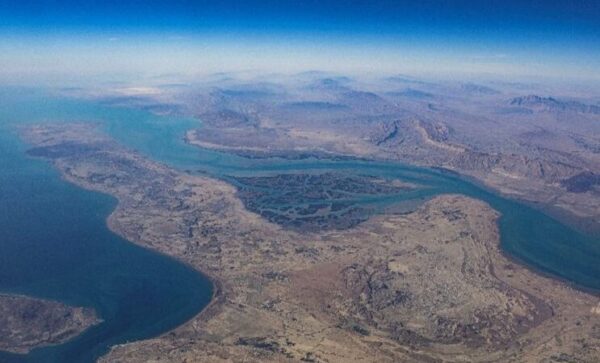
CENTCOM said the military operation focused on a ground control station used by Iranian forces on Qeshm Island. The island, located near the Strait of Hormuz, plays a strategic role due to its proximity to major shipping lanes used for global oil and gas transportation.
The strike comes amid growing uncertainty surrounding ongoing efforts to negotiate a ceasefire linked to the broader conflict involving Iran, Israel, and Iranian-backed groups operating across the region.
Conflicting Signals Over Diplomatic Talks
Reports from Iranian media outlets suggested that Tehran had suspended communications with international mediators regarding a possible ceasefire extension. However, US President Donald Trump strongly rejected those claims.
In a statement posted on social media, Trump said discussions with Iran were continuing without interruption.
“The conversations between us have been going on continuously,” Trump said, adding that negotiations had taken place in recent days and were still ongoing.
The conflicting messages have created uncertainty about the future of diplomatic efforts aimed at reducing military tensions in the region.
US Stops Tanker Allegedly Violating Blockade
In a separate development, the US military announced that it had stopped another oil tanker attempting to reach an Iranian port in violation of the American naval blockade.
According to CENTCOM, the Botswana-flagged merchant vessel M/T Lexie ignored repeated warnings over a 24-hour period. A US aircraft reportedly fired a Hellfire missile into the ship’s engine room to disable the vessel and prevent it from continuing its journey.
US officials said it was the seventh ship intercepted while attempting to breach the blockade.
Iran Faces Growing Economic Challenges
While geopolitical tensions continue to dominate headlines, Iran is also grappling with severe economic difficulties.
New figures released by Iran’s Central Bank indicate that annual inflation reached 77.2 percent in May compared with the same period last year. The data highlights mounting pressure on Iranian households as prices for everyday necessities continue to surge.
Healthcare costs, transportation expenses, communication services, and other essential goods have experienced significant price increases, further straining consumer spending.
Economic analysts within Iran have described the current inflationary environment as one of the most severe in modern history.
Strategic Importance of the Strait of Hormuz
The Strait of Hormuz remains at the center of the current crisis. The narrow waterway serves as a vital passage for global energy supplies, with a substantial share of the world’s traded oil and natural gas passing through the region.
Any disruption to shipping traffic could have major implications for international energy markets and global economic stability.