World News
US Launches Fresh Airstrikes on Iran After Strait of Hormuz Ship Attack, Ceasefire Collapses
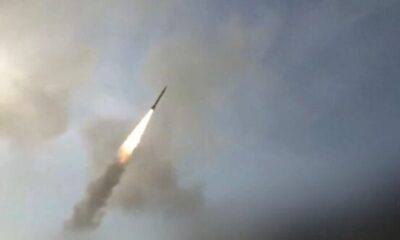
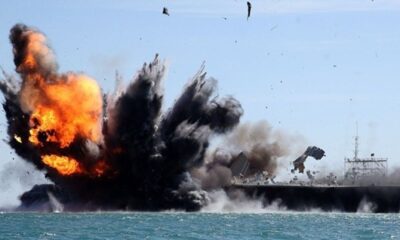
The United States has launched a new wave of military strikes against Iran after a container ship was attacked in the Strait of Hormuz, marking a major escalation in the ongoing conflict and effectively ending the brief ceasefire between the two countries.

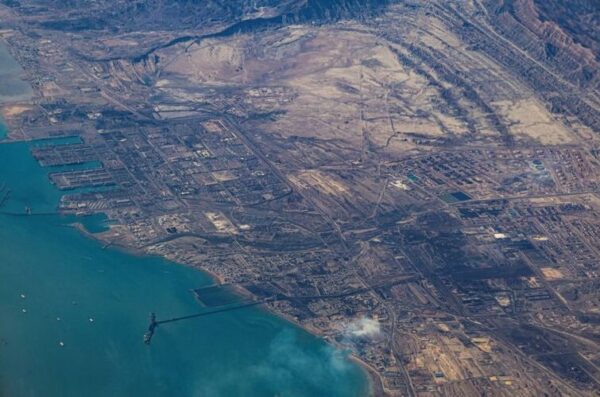
The United States has launched a new wave of military strikes against Iran after a container ship was attacked in the Strait of Hormuz, marking a major escalation in the ongoing conflict and effectively ending the brief ceasefire between the two countries.
According to the US military, the latest strikes were carried out after Iran’s Islamic Revolutionary Guard Corps (IRGC) targeted a commercial container ship passing through the strategically important Strait of Hormuz on Sunday.
The renewed military action comes after several days of rising tensions between Washington and Tehran. President Donald Trump declared that the ceasefire, which had been aimed at reducing hostilities after the conflict involving the United States, Israel, and Iran, had effectively collapsed. However, he indicated that diplomatic negotiations remain a possibility if Iran changes its approach.
Iran Closes Strait of Hormuz
Iran announced that it had closed the Strait of Hormuz after firing what it described as a warning shot at a vessel allegedly traveling through an unauthorized route. Iranian authorities warned that any military response from the United States would trigger a “severe response.”
The Strait of Hormuz is one of the world’s most critical maritime trade routes, handling nearly 20% of global oil and liquefied natural gas (LNG) shipments. Its closure has already raised concerns across international energy markets.
Container Ship Suffers Heavy Damage
US Central Command identified the affected vessel as the M/V GFS Galaxy, a Cyprus-flagged container ship. Officials said the ship sustained significant engine room damage during the attack, while one civilian crew member remains missing.
Iran claimed that several commercial ships ignored navigation warnings and attempted to pass through restricted waters. The Revolutionary Guards stated that the waterway would remain closed until what they called an end to “US interference in the region.”
Trump Orders Military Response
According to US Central Command, military operations began at approximately 7:15 p.m. ET on Saturday, about an hour after Iran issued a statement warning that any retaliation would result in attacks on additional US military facilities across the Middle East.
The White House confirmed that President Donald Trump authorized the strikes, although officials have not released further operational details.
Rising Pressure on Global Energy Markets
The renewed conflict has intensified instability across the Gulf region. Analysts warn that continued disruption in the Strait of Hormuz could significantly impact global energy supplies, pushing crude oil and fuel prices even higher.
Higher gasoline prices are expected to remain a politically sensitive issue for the Trump administration as the United States moves closer to the upcoming congressional elections.
Diplomatic Efforts Continue
Despite the renewed military action, diplomatic channels have not completely closed.
Iranian Foreign Minister Abbas Araqchi accused Washington of violating the ceasefire agreement, stating that any peace arrangement requires “mutual compliance.”
Meanwhile, Reuters reported that Iran, the United States, Qatar, and Pakistan were exploring the possibility of fresh negotiations through mediation efforts led by Oman. It remains unclear whether those talks have produced any breakthrough.
Conflict Shows No Signs of Ending
The United States has demanded that Iran publicly guarantee the safety of commercial shipping through the Strait of Hormuz and allow free passage without restrictions.
Although Iran has not officially claimed responsibility for recent attacks on commercial vessels, regional security experts believe such incidents are often used to increase leverage during diplomatic negotiations.
With military operations resuming and the ceasefire now effectively over, international observers fear the confrontation could further destabilize the Middle East and disrupt global trade if diplomatic efforts fail.
Read Also : Sirmaur Exports Cross ₹3,200 Crore as Himachal District Targets Bigger Global Footprint