World News
Donald Trump Delays Iran Ceasefire Decision as White House Pushes Tough Nuclear Conditions
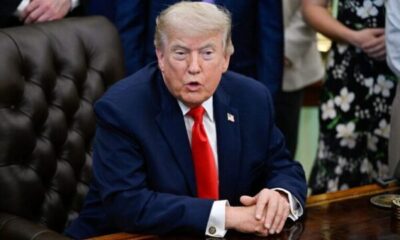
US President Donald Trump has postponed making a final decision on a proposed agreement aimed at extending the fragile ceasefire with Iran, following a high-level meeting with national security advisers in the White House Situation Room.

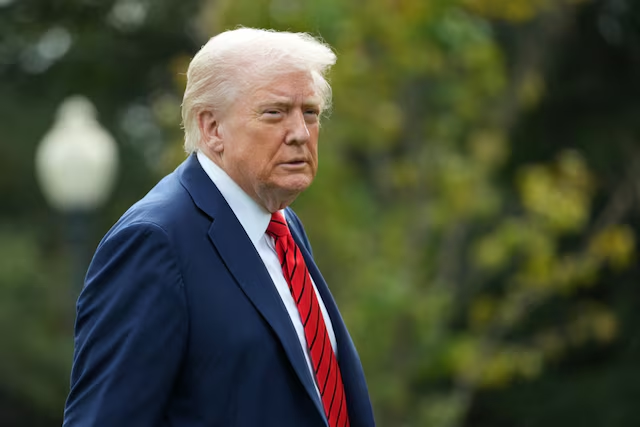
US President Donald Trump has postponed making a final decision on a proposed agreement aimed at extending the fragile ceasefire with Iran, following a high-level meeting with national security advisers in the White House Situation Room.
The closed-door meeting, which lasted nearly two hours on Friday, ended without a definitive outcome. According to senior administration officials, Trump remains committed to securing an agreement that aligns with America’s national security interests and prevents Iran from advancing its nuclear programme.
Speaking before the meeting, Trump indicated that he was preparing to make a “final determination” on the proposed deal. However, officials later confirmed that no decision had been reached and discussions are expected to continue.
White House Sets Clear Red Lines
The proposed agreement, which has been under negotiation for weeks, would extend the current Iran ceasefire by 60 days while both sides continue discussions over Tehran’s controversial nuclear activities.
According to sources familiar with the talks, Trump is unwilling to approve any deal unless Iran agrees to strict conditions. These include preventing Iran from obtaining a nuclear weapon, addressing concerns over its enriched uranium stockpile, and ensuring the reopening of the strategically vital Strait of Hormuz.
In a social media post, Trump reiterated his position, stating that Iran must commit to never developing a nuclear bomb. He also called for the removal of sea mines and the restoration of full international navigation through the Strait of Hormuz.
Iran Signals Distrust Despite Ongoing Negotiations
Iranian officials have responded cautiously, emphasizing that the agreement remains incomplete and that significant differences still exist between the two sides.
Mohammad Bagher Qalibaf, one of Iran’s senior political figures, stated that Tehran does not rely on promises or guarantees and would judge any agreement based on concrete actions. His remarks reflect the deep mistrust that continues to shape relations between Iran and the United States following years of conflict and sanctions.
Adding to the uncertainty, Iranian Foreign Ministry spokesperson Esmail Baghaei confirmed that negotiations are still ongoing and that no final agreement has been reached.
Iranian leaders have also indicated that their immediate focus remains ending regional hostilities rather than discussing detailed nuclear arrangements.
Nuclear Programme Remains the Biggest Obstacle
One of the most challenging issues in the negotiations is Iran’s enriched uranium stockpile. International nuclear monitors have previously reported that Iran possesses a significant quantity of uranium enriched to levels that bring it closer to weapons-grade material.
While Iran continues to insist that its nuclear programme is intended for peaceful purposes, the United States and its allies remain concerned about the potential military implications.
Trump has reportedly renewed calls for the stockpile to be removed and permanently destroyed under international supervision as part of any future agreement.
The issue is expected to remain a major sticking point in negotiations, with both sides showing little willingness to compromise on core security concerns.
Strait of Hormuz at the Center of Global Concerns
The proposed deal also includes provisions to reopen the Strait of Hormuz, one of the world’s most important energy transit routes.
The waterway has faced major disruptions since escalating tensions between Iran, Israel, and the United States triggered a broader regional crisis. The closure has significantly impacted global energy markets, contributing to higher fuel prices and increased economic uncertainty worldwide.
Under the draft agreement, Iran would reportedly remove naval mines and guarantee safe passage for international shipping. In return, Washington could gradually ease certain sanctions and reduce restrictions affecting Iranian ports and oil exports.
Iran has suggested that future management of the strait should be coordinated with neighboring Oman, although details remain under discussion.