News
Donald Trump Calls PM Modi ‘Good Friend’, Hints at Major India-US Trade Deal
US President Donald Trump praised Prime Minister Narendra Modi as a “good friend” and expressed confidence in a new India-US trade deal. Here’s what Trump said about tariffs, trade negotiations, and the future of bilateral relations.

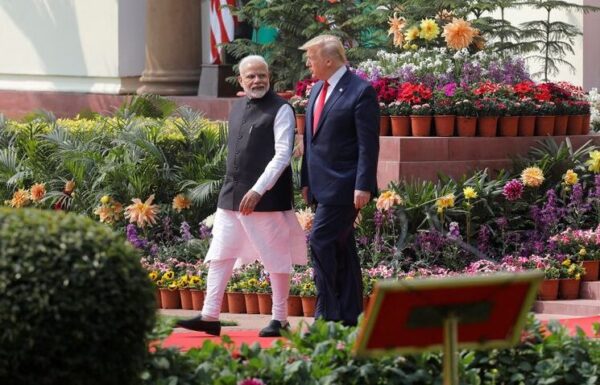
US President Donald Trump praised Prime Minister Narendra Modi as a “good friend” and expressed confidence in a new India-US trade deal. Here’s what Trump said about tariffs, trade negotiations, and the future of bilateral relations.
Trump Praises PM Modi, Expresses Confidence in India-US Trade Agreement
US President Donald Trump has expressed optimism about the ongoing trade negotiations between India and the United States, saying he shares a strong relationship with Prime Minister Narendra Modi and believes both nations will soon finalize a trade agreement.
Speaking to reporters at the Oval Office on Thursday, Trump described PM Modi as a close friend and indicated that diplomatic ties between the two leaders could help pave the way for a successful trade deal.
“We will get to a deal because I like your prime minister a lot. He is a good friend of mine. We get along great, and we are going to make a deal,” Trump said.
His remarks come at a crucial time when both countries are actively negotiating an interim bilateral trade agreement aimed at strengthening economic cooperation and resolving long-standing trade disputes.
Trump Raises Concerns Over India’s Past Tariff Policies
While expressing confidence about the future, Trump also criticized India’s historical tariff structure, claiming that American businesses faced significant challenges due to high import duties.
According to Trump, India imposed heavy tariffs on several US products, making it difficult for American companies to compete in the Indian market.
“They charged tremendous amounts of tariffs to our companies, and we didn’t charge them anything,” Trump said.
The comments highlight one of the key issues that negotiators from both sides are trying to address during ongoing trade discussions.
India-US Trade Talks Show Positive Momentum
Earlier this week, a US delegation visited India and completed four days of intensive discussions focused on an interim trade agreement.
India’s Commerce Ministry described the negotiations as constructive and pragmatic, stating that both countries remain committed to reaching a mutually beneficial agreement that will strengthen bilateral trade and economic ties.
Officials from both sides reportedly explored ways to improve market access, reduce trade barriers, and create new opportunities for businesses in both countries.
Harley-Davidson Example Returns to the Spotlight
Trump also revisited the long-running issue involving Harley-Davidson motorcycles, which has frequently been cited as an example of trade imbalance between the two nations.
The US President argued that steep tariffs previously imposed on imported motorcycles made it difficult for the iconic American manufacturer to sell its products in India.
“They charged a 200 per cent tariff, so Harley-Davidson was precluded. They ended up going to India and building their own plants,” Trump said.
He contrasted this with the US market, claiming that Indian motorcycle manufacturers had greater access to American consumers without facing similar tariff barriers.
How the India-US Trade Deal Has Evolved
The current framework for the Bilateral Trade Agreement (BTA) was initially outlined following a phone conversation between Trump and PM Modi earlier this year.
The agreement was expected to reduce certain tariff burdens and improve trade conditions between the world’s two largest democracies. However, developments in the US legal system later complicated the situation.
A ruling by the US Supreme Court challenged the broader reciprocal tariff framework introduced under the International Emergency Economic Powers Act (IEEPA), forcing the administration to reassess several trade measures.
Following the ruling, the US announced a temporary 10% tariff on imports from all countries for a limited period, prompting India and the United States to revisit parts of their ongoing negotiations.