World News
Iran IRGC Warns US Base-Hosting Countries of ‘Corresponding Response’ as Gulf Conflict Escalates
Iran’s Islamic Revolutionary Guard Corps (IRGC) has issued a fresh warning to countries hosting US military forces, saying they should prepare for a “corresponding response” as tensions between Tehran and Washington continue to escalate across the Gulf region.

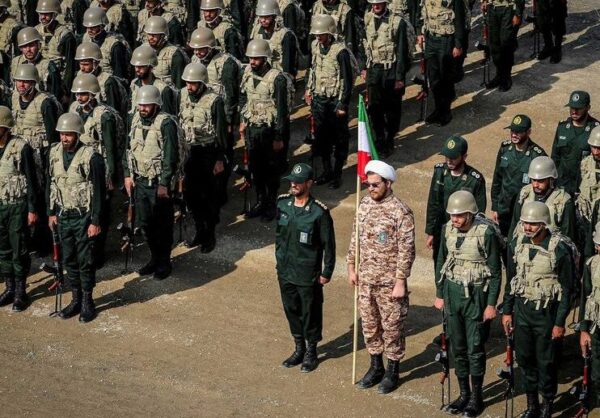
Iran’s Islamic Revolutionary Guard Corps (IRGC) has issued a fresh warning to countries hosting US military forces, saying they should prepare for a “corresponding response” as tensions between Tehran and Washington continue to escalate across the Gulf region.
According to Iran’s semi-official Tasnim news agency, the IRGC has urged countries hosting American troops to activate civil defence units and protect civilians from potential military targets. The warning comes as Iran and the United States continue exchanging attacks amid growing tensions over the strategically important Strait of Hormuz.
The IRGC accused regional governments of allowing their territories to be used as launchpads for military operations against Iran.
IRGC Claims Strikes on US Military Facilities in Kuwait
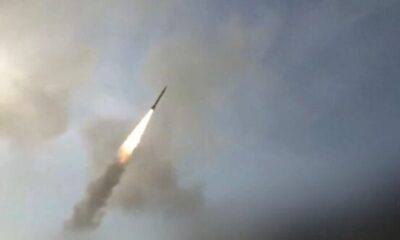
As part of its reported retaliation, the IRGC claimed that its ground forces used missiles and unmanned aerial vehicles to target a US military logistics centre at Camp Arifjan in Kuwait. Iranian officials claimed that the strike caused casualties among personnel at the facility.
The IRGC also claimed to have carried out an attack on the US Ali Al Salem Air Base in Kuwait. According to the Iranian military, the operation targeted radar systems, a weapons maintenance hangar and a drone facility.
These claims have not been independently verified. The reported attacks come amid a wider escalation in hostilities between Iran and the United States across the Middle East.
Strait of Hormuz Becomes a Major Flashpoint
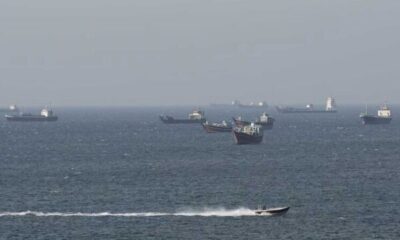
The latest escalation has further intensified the standoff over the Strait of Hormuz, one of the world’s most important energy corridors. The waterway has seen a sharp decline in maritime traffic as the conflict continues, raising concerns over global oil supplies and pushing energy prices higher.
The United States has carried out repeated air operations against Iranian military infrastructure, while Iran has responded with missile and drone attacks targeting US military facilities and other locations across the Gulf region.
Kuwait said it intercepted incoming Iranian missiles and drones, while Bahrain reported that air raid sirens were activated as the conflict spread across the region.
US Claims Seventh Consecutive Night of Strikes
The US Central Command said American forces conducted a seventh consecutive night of air operations against Iranian military capabilities late Friday.
According to the command, the strikes targeted surveillance sites, military logistics infrastructure, underground weapons storage facilities and maritime capabilities.
Iranian state television, meanwhile, reported that US airstrikes damaged transport infrastructure in southern Iran’s Hormozgan province. The reported damage included key road and rail links around Bandar Khamir, potentially affecting routes connecting Bandar Abbas with central Iran and Tehran.
Iran Reports Damage to Power Infrastructure
Iran’s Energy Ministry also acknowledged attacks on power infrastructure for the first time since the latest escalation began.
The ministry urged residents in southern provinces affected by a heatwave to reduce electricity consumption. However, Iranian authorities did not provide detailed information about the specific power facilities that were reportedly damaged.
The developments have raised concerns that the conflict could expand further, with military bases, energy infrastructure and critical transport routes increasingly becoming part of the confrontation.
As the US and Iran continue their tit-for-tat military operations, regional governments are facing growing pressure to prevent the conflict from spreading beyond existing battle zones. The IRGC’s latest warning suggests that countries hosting American forces could face further threats if the escalation continues.