World News
Iran Rejects US-Led Bahrain Security Talks, Says Strait of Hormuz Is Under Tehran’s Control
Iran has strongly criticized a recent US-led regional security dialogue held in Bahrain, with senior Iranian diplomat Kazem Gharibabadi asserting that the strategic Strait of Hormuz remains under Tehran’s authority and cannot be governed by foreign military alliances.

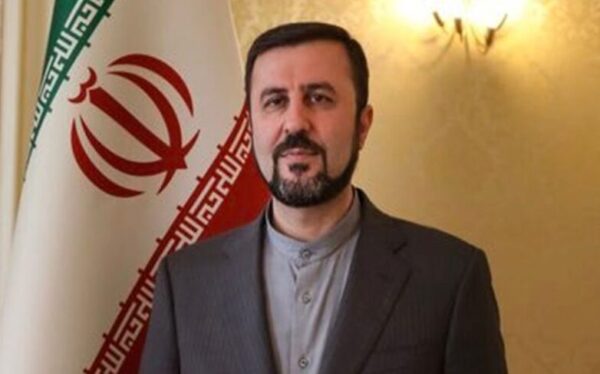
Iran has strongly criticized a recent US-led regional security dialogue held in Bahrain, with senior Iranian diplomat Kazem Gharibabadi asserting that the strategic Strait of Hormuz remains under Tehran’s authority and cannot be governed by foreign military alliances.
Speaking through a post on X, Iran’s Deputy Foreign Minister for Legal and International Affairs rejected what he described as Western attempts to shape the security architecture of the Persian Gulf. He stressed that lasting peace and stability in the region can only be achieved through cooperation among neighboring countries rather than external military involvement.
“Hormuz Is Under Iran’s Command”
Gharibabadi directly challenged the role of the US Central Command (CENTCOM) in the region, stating that the Strait of Hormuz is under Iran’s command and not under the authority of the American military structure.
He argued that a military gathering in Bahrain cannot determine the legal framework or security arrangements of the Persian Gulf.
According to the Iranian official, regional security depends on ending foreign interventions, respecting national sovereignty, and adapting to changing geopolitical realities in the Middle East.
“The region’s security will be ensured through the end of interventions, the withdrawal of the United States from the area, respect for countries’ sovereignty, and acceptance of new geopolitical realities,” Gharibabadi said.
CENTCOM Hosts Regional Security Dialogue in Bahrain
Iran’s remarks came shortly after CENTCOM announced that military leaders from 12 countries gathered in Bahrain to discuss regional security challenges and strengthen defense cooperation.
The meeting, hosted by the Bahrain Defense Force, was led by CENTCOM Commander Admiral Brad Cooper and included representatives from Bahrain, Egypt, Jordan, Kuwait, Lebanon, Oman, Qatar, Saudi Arabia, Syria, the United Arab Emirates, and Yemen.
Officials participating in the conference emphasized their commitment to maintaining the free flow of commercial shipping through the Strait of Hormuz, one of the world’s most important maritime trade routes.
Focus on Maritime Security and Defense Cooperation
CENTCOM said the dialogue focused on improving defense coordination, addressing emerging security threats, and enhancing military cooperation among regional partners.
Admiral Brad Cooper reaffirmed Washington’s commitment to working closely with allied nations in the Middle East.
“We continue to stand shoulder to shoulder with our regional partners,” Cooper said after the meeting, adding that the discussions highlighted a shared commitment to regional stability and security.
The conference also marked a notable development in regional diplomacy, as CENTCOM described it as the first US-led defense gathering attended by military leaders from both Syria and Lebanon.
Growing Strategic Importance of the Strait of Hormuz
The Strait of Hormuz remains one of the world’s most critical maritime chokepoints, serving as a key transit route for global oil shipments and international trade.
As geopolitical tensions persist in the Middle East, differing views between Iran and the United States over security responsibilities in the Gulf continue to shape regional dynamics.
Analysts believe the latest exchange of statements underscores the broader competition over influence, security arrangements, and maritime control in one of the world’s most strategically significant regions.