World News
UN Suspends Strait of Hormuz Ship Escorts After Vessel Attack Raises Fresh Iran Tensions
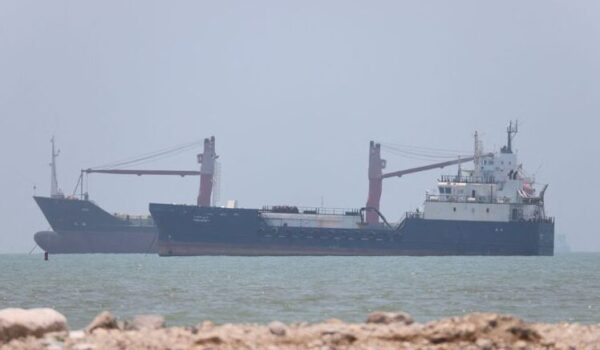
The United Nations has temporarily suspended its ship escort operations through the Strait of Hormuz after a cargo vessel reported coming under attack near Oman. The incident has renewed fears about regional security and raised fresh questions over the stability of the recently announced Iran ceasefire framework.

The United Nations has temporarily suspended its ship escort operations through the Strait of Hormuz after a cargo vessel reported coming under attack near Oman. The incident has renewed fears about regional security and raised fresh questions over the stability of the recently announced Iran ceasefire framework.
The move comes just days after the International Maritime Organization (IMO) launched a humanitarian initiative aimed at helping stranded commercial vessels safely leave the strategically important waterway.
Cargo Ship Reports Attack Near Oman
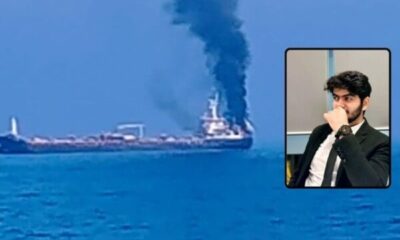
According to the UK Maritime Trade Operations (UKMTO), the cargo vessel reported being struck by a projectile while sailing near Oman on Thursday. Initial security assessments suggest the vessel may have been targeted by a drone.
Two U.S. officials, quoted by Reuters, alleged that Iranian forces were responsible for the attack. However, Iranian authorities have not officially confirmed the claim.
The vessel involved has been identified by multiple maritime sources as the Singapore-flagged cargo ship Ever Lovely.
UN Pauses Escort Mission Over Safety Concerns
Following the reported attack, the International Maritime Organization (IMO) announced that it is temporarily suspending its escort operations through the Strait of Hormuz.
IMO Secretary-General Arsenio Dominguez said the pause is necessary to reassess security guarantees for commercial ships and seafarers operating in the region.
The organization clarified that the attacked vessel was not part of its evacuation convoy, but the incident highlighted the need to review the safety of all maritime operations before continuing the mission.
Iran Issues Warning to Commercial Ships
Earlier on Thursday, Iran warned international shipping companies that vessels must use only routes approved by Tehran while passing through the Strait of Hormuz.
Iran’s newly established Persian Gulf Strait Authority stated that ships using unauthorized routes would not be guaranteed safe passage. The authority added that any consequences arising from such navigation would remain the responsibility of ship owners, operators, and captains.
Iran’s Revolutionary Guards also reiterated that they would take action against vessels failing to comply with the designated shipping routes.
According to maritime security firm Ambrey, two Panama-flagged commercial ships were instructed to change course on the same day.
Why the Strait of Hormuz Matters
The Strait of Hormuz is one of the world’s most strategically important shipping lanes, connecting Gulf oil producers with international markets.
Before the conflict began earlier this year, nearly 20% of global oil and liquefied natural gas (LNG) supplies passed through this narrow waterway every day.
Any disruption in traffic through the strait can quickly affect global energy supplies, fuel prices, and financial markets worldwide.
Oil Prices Rise After Attack Report
Global oil markets reacted immediately to reports of the incident.
Benchmark crude prices climbed nearly 2% as investors grew concerned that renewed tensions could delay the full normalization of oil exports from the Gulf region.
Despite the latest security scare, U.S. Energy Secretary Chris Wright said oil shipments through the Strait of Hormuz had recently approached levels seen before the conflict escalated, with approximately 20 million barrels of oil moving through the passage in the previous 24 hours.
Shipping data also indicates that crude exports have reached their highest levels since the conflict began earlier this year.
Ceasefire Faces New Test
The latest maritime incident has cast fresh uncertainty over the preliminary ceasefire framework between Iran and the United States.
While the agreement has reduced direct military confrontation, several key issues remain unresolved, including:
- Control of the Strait of Hormuz
- Iran’s nuclear program
- Financial sanctions and frozen assets
- International inspections
- Regional security arrangements
U.S. Secretary of State Marco Rubio warned that any attempt to threaten commercial shipping in the Strait of Hormuz would create serious challenges for the ongoing diplomatic process.
Meanwhile, Iranian officials continue to insist that navigation through the strategic waterway will remain subject to Iranian security regulations.