World News
Xi Jinping and Vladimir Putin Showcase Strong China-Russia Alliance Amid Rising Global Tensions
Just days after hosting former US President Donald Trump in Beijing, Chinese President Xi Jinping rolled out the red carpet once again — this time for Russian President Vladimir Putin. The closely timed diplomatic visits have sparked fresh global discussions about the strengthening alliance between China and Russia and its growing impact on world politics.

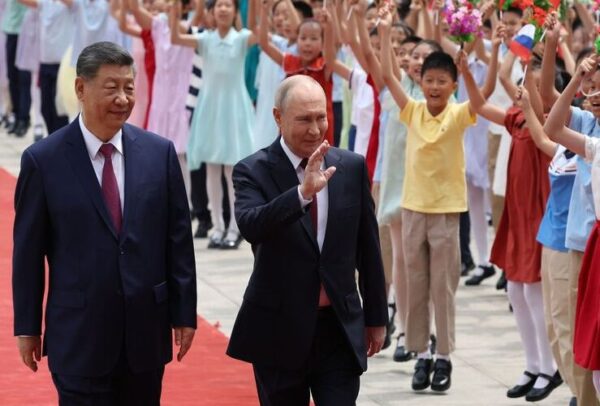
Just days after hosting former US President Donald Trump in Beijing, Chinese President Xi Jinping rolled out the red carpet once again — this time for Russian President Vladimir Putin. The closely timed diplomatic visits have sparked fresh global discussions about the strengthening alliance between China and Russia and its growing impact on world politics.
Putin visited Beijing from May 19 to May 20, marking yet another chapter in the increasingly close relationship between the two global powers. The Russian leader has now visited China 25 times, while Xi and Putin have reportedly met face-to-face more than 40 times since Xi became China’s president in 2013.
The latest summit highlighted not just diplomatic friendship but also a shared geopolitical vision. Analysts believe the meeting sent a strong signal to Western nations, particularly the United States and NATO, about the growing coordination between Beijing and Moscow.
China-Russia Partnership Enters “New Stage”
During the meeting, Putin described Xi as his “long-time good friend,” while both leaders praised what they called a “new stage” in bilateral relations based on equality, mutual respect and strategic cooperation.
Xi Jinping said the China-Russia relationship had entered “a new stage of greater achievements and faster development,” reflecting the increasing economic and political cooperation between the two countries.
The summit also marked significant milestones in China-Russia relations. The two nations signed the Treaty of Good-Neighbourliness and Friendly Cooperation 25 years ago, while 2026 will mark 30 years of their strategic partnership.
Economic ties between the two countries continue to grow rapidly, with bilateral trade reaching approximately $228 billion last year.
Joint Declaration Targets Western Dominance
One of the biggest outcomes of the summit was the release of a joint declaration advocating for a “multipolar world” and a “new type of international relations.” The statement criticized unilateral actions, hegemonism and bloc politics, which many observers interpreted as a direct criticism of Western powers led by the United States.
The declaration warned that increasing geopolitical conflicts and weakening global institutions could push the world toward instability and “the law of the jungle.”
China and Russia called for:
- Greater openness and inclusive global cooperation
- Equal and indivisible security among nations
- Reform of global governance institutions
- Respect for civilizational and cultural diversity
However, critics quickly pointed out contradictions in the statement. Analysts noted that Russia’s ongoing war in Ukraine and China’s aggressive posture in the South China Sea raise questions about their calls for peaceful conflict resolution and mutual security.
Experts Warn of Increasing Global Risks
International security experts believe the Xi-Putin meeting reflects deeper strategic coordination between China and Russia during a period of rising global uncertainty.
Malcolm Davis, Senior Analyst at the Australian Strategic Policy Institute, warned that the growing alignment between Moscow and Beijing could have serious implications for Europe and the Indo-Pacific region.
According to Davis, the timing of Putin’s visit is significant because it comes amid escalating tensions involving NATO, Ukraine and Taiwan. He also suggested that weakening Western unity could encourage both China and Russia to take more aggressive geopolitical risks.
“We’re entering truly perilous times,” Davis warned, comparing current tensions to the geopolitical atmosphere of the late 1930s before World War II.
Analysts Say Strategy Matters More Than Personal Chemistry
Despite the highly publicized images of Xi and Putin sharing tea, touring exhibitions and attending signing ceremonies together, some experts argue that the relationship is driven more by strategic interests than personal friendship.
Dr. Yu Jie, Senior Research Fellow on China at Chatham House’s Asia-Pacific Programme, stated that geopolitics is shaped by national priorities and power calculations rather than political “bromance.”
She explained that the summit was carefully designed to demonstrate that China and Russia remain united in their efforts to reshape the global order at a time when international fragmentation is increasing.
Growing Concerns Over Global Power Balance
The summit has intensified concerns in Western capitals about the emergence of a stronger China-Russia axis, especially as speculation grows about closer ties with North Korea.
Reports suggesting that Xi Jinping may soon visit Pyongyang have further fueled discussions about a possible strategic bloc involving China, Russia and North Korea.
As geopolitical tensions continue to rise across Europe and Asia, the Beijing summit has reinforced the message that China and Russia are preparing to play an increasingly influential role in shaping the future global power balance.