National News
Lok Sabha Uproar as Rahul Gandhi’s Attempt to Cite Ex-Army Chief Naravane’s Memoir Sparks National Security Row
The Lok Sabha witnessed dramatic scenes on Monday after Leader of Opposition Rahul Gandhi attempted to raise questions about India’s handling of China by referring to reports linked to former Army Chief General M M Naravane’s memoir, triggering strong protests from the Treasury benches and repeated interventions from the Speaker.

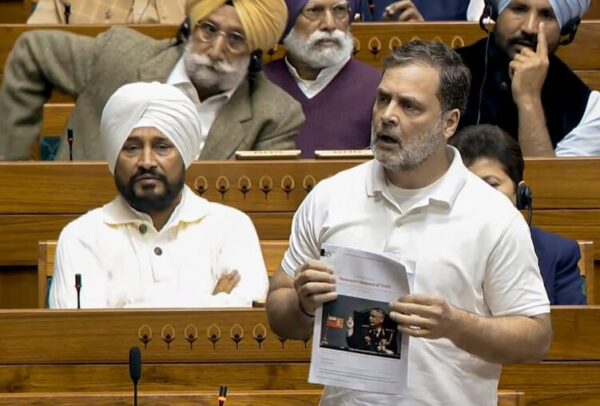
The Lok Sabha witnessed dramatic scenes on Monday after Leader of Opposition Rahul Gandhi attempted to raise questions about India’s handling of China by referring to reports linked to former Army Chief General M M Naravane’s memoir, triggering strong protests from the Treasury benches and repeated interventions from the Speaker.
The confrontation unfolded during the discussion on the Motion of Thanks to the President’s Address. What began as Gandhi’s response to BJP allegations questioning the Congress party’s patriotism quickly escalated into a broader debate over national security, parliamentary rules and the opposition’s right to speak on sensitive foreign policy matters.
Gandhi sought to cite reported disclosures from Naravane’s upcoming memoir, claiming they highlighted serious concerns about Chinese military movements and decision-making at the highest levels of government. He also referred to incidents in Doklam, alleging that Chinese tanks had entered Indian territory.
Defence Minister Rajnath Singh immediately objected, insisting that only authenticated and officially available material could be cited in the House. He pointed out that Naravane’s book had not yet been published and therefore could not be treated as a verified source.
Home Minister Amit Shah supported the objection, stating that unpublished books or magazine reports could not be quoted in Parliament, as their contents cannot be verified. Speaker Om Birla ruled that House rules prohibit reading or quoting from material unrelated to parliamentary proceedings.
The controversy centres around Naravane’s memoir, Four Stars of Destiny, which is reportedly under review by the Ministry of Defence. The book has attracted attention for its expected references to the 2020 India-China border standoff and other sensitive defence matters.
As the exchanges grew heated, Samajwadi Party MP Akhilesh Yadav backed Gandhi, saying the China issue was important and the opposition should be allowed to speak. Union Minister Kiran Rijiju countered that the Speaker’s ruling must be respected.
Gandhi argued that the President’s Address covered issues such as foreign policy, exports and national security, making it legitimate to discuss India-China relations. However, the Speaker repeatedly asked him not to quote or refer to the unpublished material.
The Chair cited Rule 353, which requires advance written notice before making allegations against ministers. Shah accused Gandhi of defying the Speaker’s directions and called for stricter adherence to parliamentary procedures.
The standoff eventually brought proceedings to a halt, forcing the Speaker to adjourn the House till 3 pm amid loud protests and sloganeering from both sides.