World News
US Reimposes Naval Blockade on Iran as Middle East Tensions Escalate, Oil Prices Surge
The United States has reinstated a naval blockade targeting merchant vessels travelling to and from Iranian ports, marking a major escalation in the ongoing conflict with Tehran. The move follows a series of attacks on commercial ships that Washington has blamed on Iran, raising fresh concerns over maritime security and global energy supplies.

The United States has reinstated a naval blockade targeting merchant vessels travelling to and from Iranian ports, marking a major escalation in the ongoing conflict with Tehran. The move follows a series of attacks on commercial ships that Washington has blamed on Iran, raising fresh concerns over maritime security and global energy supplies.
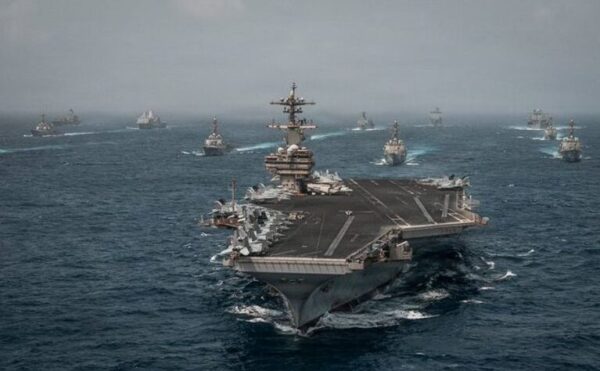
According to the US Central Command (CENTCOM), the blockade officially came into effect at 4:00 p.m. US Eastern Time on July 14 (1:30 a.m. IST on July 15). The operation is being supported by a massive military presence, including nearly 50,000 US troops, more than 20 Navy warships, and hundreds of military aircraft deployed across the Middle East.
US Strengthens Military Presence in the Region
CENTCOM confirmed that American forces remain on high alert as tensions continue to rise. In a statement shared on X, the command said its naval and air forces are fully prepared to respond to any further threats in the region.
The US military currently operates from 19 bases across the Middle East, while additional personnel remain stationed aboard warships patrolling key maritime routes.
US Accuses Iran of Targeting Commercial Ships
Announcing the renewed blockade, Admiral Brad Cooper, commander of CENTCOM, accused Iran of carrying out attacks on civilian shipping over the past week.
According to US officials, seven commercial vessels were targeted in recent days, leaving nearly a dozen civilian crew members killed, injured, or missing. The US also alleged that Iran launched multiple missiles and drones toward neighbouring Gulf countries, describing the attacks as actions that threaten regional stability and innocent lives.
Iran has not accepted the US allegations in the information provided.
Strait of Hormuz Remains Under Global Focus
US President Donald Trump stated on Tuesday that the Strait of Hormuz would remain open for international commercial shipping, except for vessels connected to Iran.
The strategic waterway is one of the world’s most important energy corridors, handling a significant share of global oil exports. Any disruption in the region has immediate consequences for international markets.
Oil Prices Rise as Shipping Activity Declines
The renewed military tensions have already affected global energy markets. Brent crude oil climbed to approximately $81.54 per barrel, its highest level since mid-June.
At the same time, shipping analytics firm Kpler reported that vessel traffic through the Strait of Hormuz dropped by nearly 52% between July 10 and July 12 compared with the previous week, reflecting growing concerns among commercial shipping operators.
Missile Exchanges Intensify Conflict
The latest developments come after the United States and Iran began exchanging missile and drone strikes on July 7, effectively ending the peace memorandum both countries had signed on June 17.
The US military said it recently conducted a five-hour operation targeting multiple Iranian military locations, including Bushehr, Chah Bahar, Jask, Konarak, Abu Musa, and Bandar Abbas. According to Washington, the strikes were intended to weaken Iran’s capability to attack commercial shipping.
In response, Iran’s Islamic Revolutionary Guard Corps (IRGC) announced a broader retaliatory campaign targeting US allies and interests across the Gulf region.
Regional Tensions Continue to Rise
With military deployments increasing, commercial shipping under pressure, and oil prices climbing, the latest confrontation has intensified concerns over stability in the Middle East. Global markets are expected to closely monitor further developments, particularly around the Strait of Hormuz, as any escalation could have significant implications for international trade and energy supplies.