World News
Iran Says It Disabled UAE Oil Tankers in Strait of Hormuz; UAE Accuses Tehran of Missile Attack That Killed Indian Sailor
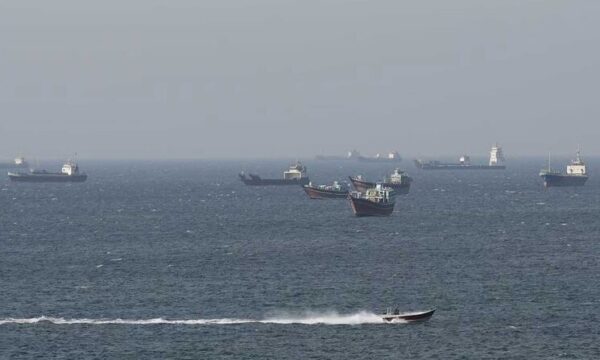
Tensions in the Gulf region have escalated sharply after Iran claimed responsibility for disabling two United Arab Emirates (UAE) oil tankers in the strategically important Strait of Hormuz. The UAE, however, accused Tehran of carrying out missile strikes on the vessels, an incident that reportedly killed an Indian sailor and injured eight other crew members.

Tensions in the Gulf region have escalated sharply after Iran claimed responsibility for disabling two United Arab Emirates (UAE) oil tankers in the strategically important Strait of Hormuz. The UAE, however, accused Tehran of carrying out missile strikes on the vessels, an incident that reportedly killed an Indian sailor and injured eight other crew members.
According to the Islamic Revolutionary Guard Corps (IRGC), its naval forces targeted the two tankers after alleging that the vessels were involved in “illegal activities.” Iran claimed the ships had switched off their navigation systems, ignored repeated warnings from Iranian authorities, and attempted to pass through a restricted route in the Strait of Hormuz, putting maritime safety at risk.
In an official statement, the IRGC alleged that the vessels had been “misled” by the United States and warned regional countries against cooperating with Washington in matters related to the Strait of Hormuz. The force said any such cooperation would increase regional instability, delay the reopening of the vital shipping lane, and contribute to a global energy crisis.
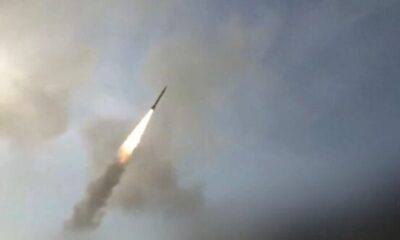
The statement came shortly after the UAE’s Ministry of Defence accused Iran of launching cruise missile attacks on two Emirati commercial vessels—the oil tanker Mombasa and the liquefied natural gas carrier Al Bahiyah—while they were sailing through the southern transit route of the Strait of Hormuz within Omani waters.
UAE officials confirmed that the attack resulted in the death of an Indian crew member aboard the Mombasa, while eight others were injured. Four of the injured remain in critical condition, according to officials.
Authorities said the missile strikes caused significant structural damage to both vessels and triggered onboard fires. Emergency response teams later managed to bring the fires under control.
Condemning the incident, the UAE described the attack as a serious violation of international law and warned that it reserves the right to respond to what it called an act of aggression. The ministry stated that all necessary measures would be taken to protect the country’s territory, citizens, and residents.
Earlier, a spokesperson for Iran’s Khatam al-Anbiya Central Headquarters had also warned that Tehran would not allow the United States to play any role in managing the Strait of Hormuz. According to Iranian media, the spokesperson said any regional cooperation with Washington over the waterway would be viewed as an act of war against Iran.
The latest maritime confrontation marks a significant escalation in the ongoing tensions between Iran and the United States, with Gulf nations increasingly becoming part of the broader regional conflict.
The Strait of Hormuz remains one of the world’s most strategically important maritime routes, carrying nearly 20% of global oil shipments. Any disruption in the waterway has the potential to affect international energy supplies, global shipping, and oil prices.
With Iran and the UAE presenting sharply conflicting accounts of the incident, concerns are growing over the safety of commercial shipping in the Gulf and the possibility of further escalation in one of the world’s most critical energy corridors.