World News
Benjamin Netanyahu Orders Immediate Access to Holy Sepulchre After Palm Sunday Block Sparks Outrage
In a dramatic turn of events on Palm Sunday, Israeli Prime Minister Benjamin Netanyahu stepped in to reverse a controversial decision that had prevented Christian leaders from accessing one of the world’s holiest sites.

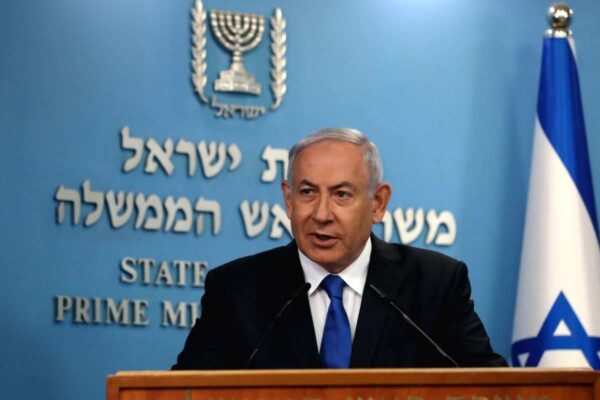
In a dramatic turn of events on Palm Sunday, Israeli Prime Minister Benjamin Netanyahu stepped in to reverse a controversial decision that had prevented Christian leaders from accessing one of the world’s holiest sites.
The issue unfolded in Jerusalem, where Israeli police reportedly stopped Cardinal Pierbattista Pizzaballa, the Latin Patriarch of Jerusalem, from entering the Church of the Holy Sepulchre to conduct Palm Sunday Mass—an incident that quickly drew attention and concern.
Responding swiftly, Netanyahu took to social media to announce that he had instructed authorities to grant the Patriarch “full and immediate access” to the church, ensuring that religious services could proceed without restrictions.
According to his statement, the decision came after he was informed about the situation and the sensitivity surrounding it, especially on such a significant day for Christians worldwide.
Why Was Entry Blocked?
Israeli authorities had initially cited security concerns amid rising tensions in the region. Netanyahu claimed that in recent days, Iran had launched ballistic missile attacks targeting areas in Jerusalem, including zones close to major religious sites.
He further stated that missile fragments had landed near the Church of the Holy Sepulchre, raising fears for the safety of worshippers. As a precaution, officials had temporarily advised limiting gatherings at religious sites across the Old City, affecting Christian, Muslim, and Jewish places of worship alike.
Out of “special concern” for safety, the Patriarch was reportedly asked not to proceed with the Palm Sunday Mass—an extraordinary move given the centuries-old tradition.
A Rare Disruption to a Sacred Tradition
Earlier in the day, Cardinal Pizzaballa, along with Fr Francesco Ielpo, Custos of the Holy Land, was stopped while traveling privately to the church. Notably, there was no formal procession or public gathering involved.
A joint statement from the Latin Patriarchate of Jerusalem and the Custody of the Holy Land described the situation as unprecedented, noting that church leaders were unable to celebrate Palm Sunday Mass at the site for the first time in centuries.
The incident has sparked widespread discussion, with many questioning the balance between security measures and religious freedom in one of the most sensitive regions in the world.
Why Palm Sunday Matters
Palm Sunday holds deep spiritual significance in Christianity. It marks the beginning of Holy Week, the most sacred period leading up to Easter.
The day commemorates the biblical account of Jesus Christ’s entry into Jerusalem, where he was welcomed by crowds waving palm branches and chanting “Hosanna.” Churches across the world observe the occasion with prayers, processions, and special masses.
For many believers, missing such a service—especially at a site as sacred as the Church of the Holy Sepulchre—is not just a disruption, but an emotional and spiritual loss.
A Sensitive Moment in a Tense Region
Netanyahu’s intervention appears to have calmed immediate tensions, but the incident highlights the fragile balance between security and religious practices in Jerusalem.
As global attention remains fixed on the region, moments like these serve as a reminder of how deeply intertwined faith, politics, and security are—especially in a city sacred to multiple religions