World News
Emmanuel Macron Urges Iran to Stop Regional Attacks, Pushes for De-escalation Talks
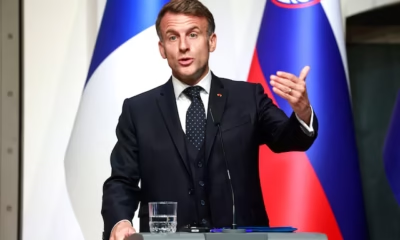
Tensions in West Asia continue to rise, and global leaders are stepping in with urgent calls for calm. French President Emmanuel Macron has strongly urged Iran to immediately stop its attacks across the region and return to the negotiating table.


Tensions in West Asia continue to rise, and global leaders are stepping in with urgent calls for calm. French President Emmanuel Macron has strongly urged Iran to immediately stop its attacks across the region and return to the negotiating table.
After holding talks with Iranian President Massoud Pezeshkian, Macron emphasized that the situation has reached a critical point. Taking to X (formerly Twitter), he stressed the “absolute necessity” of ending what he described as unacceptable attacks on neighboring countries.
Macron also highlighted the importance of protecting key infrastructure, especially energy facilities and civilian assets, which are increasingly at risk amid the escalating conflict. Another major concern he raised was ensuring freedom of navigation in the strategically vital Strait of Hormuz—a crucial artery for global oil shipments.
Push for Dialogue and Stability
The French President didn’t just call for restraint—he pushed for meaningful diplomacy. Macron urged Iran to engage “in good faith” in negotiations, signaling that dialogue remains the only viable path toward de-escalation.
According to him, these talks could help address growing international concerns over Iran’s nuclear ambitions, ballistic missile program, and its role in regional instability. The message was clear: the world is watching, and expectations are high.
Macron also raised a sensitive humanitarian issue during the discussion, calling for the immediate release of French nationals Cecile Kohler and Jacques Paris, who are currently in Iran.
UK and Saudi Arabia Join the Conversation
The situation is not just a concern for France. UK Prime Minister Keir Starmer also stepped into the diplomatic spotlight, discussing the crisis with Saudi Crown Prince Mohammed bin Salman.
The UK reiterated its support for Saudi Arabia amid ongoing regional attacks and confirmed the deployment of additional defensive military resources. Starmer reportedly described Iran’s strikes—especially those targeting critical infrastructure—as “appalling.”
Behind the scenes, the UK is working closely with global partners to ensure the uninterrupted flow of goods through key maritime routes, which are vital for international trade and energy supply.
Israel’s Position Remains Firm
Meanwhile, Israel has made it clear that it is not part of any rumored diplomatic talks between the US and Iran. Speaking at the United Nations, Israel’s envoy Danny Danon stated that military operations targeting Iranian positions are ongoing—and will continue.
His remarks underline the complex and fragile nature of the current situation, where diplomacy and military actions are unfolding simultaneously.
📌 Why This Matters
With multiple global powers involved, the West Asia crisis is entering a critical phase. From energy security to geopolitical stability, the stakes are high—not just for the region, but for the entire world.
As leaders like Macron push for dialogue, the coming days could prove decisive in determining whether tensions ease—or escalate further.