News
U.S. Supreme Court Rejects Project Veritas Challenge to Oregon’s Secret Recording Ban

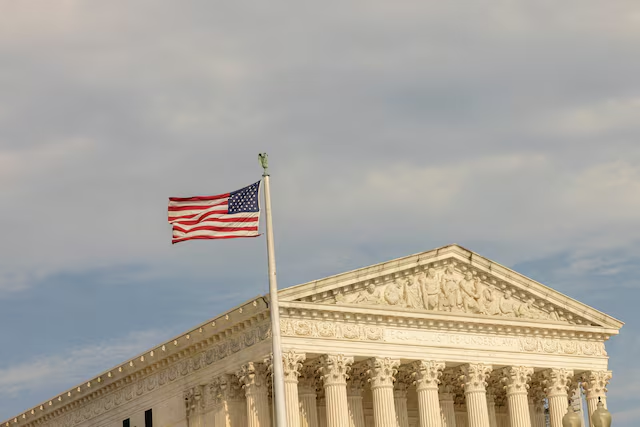
The U.S. Supreme Court on Monday declined to hear a petition from Project Veritas, a conservative activist group, that sought to overturn Oregon’s ban on secret recordings, arguing the law violated the constitutional right to free speech.
The justices let stand a lower court ruling that upheld the state law, finding it did not infringe on First Amendment protections against government restrictions on free expression.
Oregon is among a small number of U.S. states that criminalize recording conversations without the consent of all parties involved. The statute includes several exceptions — for example, allowing recordings of interactions with on-duty police officers or conversations that occur during the commission of a violent crime.
The law also relaxes disclosure requirements in situations where recording is customary, such as public gatherings and press conferences.
Project Veritas first challenged the law in 2020, claiming it unlawfully hindered the work of undercover journalists and whistleblowers investigating corruption. The group’s attorneys argued the statute prevented them from documenting racial justice protests in Portland following the killing of George Floyd by a Minneapolis police officer that same year.
Project Veritas is known for releasing heavily edited undercover recordings that portray liberal organizations and media outlets in a negative light — a practice critics say is misleading.
The state of Oregon countered that the law does not discriminate based on content, and that recording private conversations is not constitutionally protected “expressive conduct.”
Democratic Oregon Attorney General Dan Rayfield wrote in a court filing that the First Amendment also protects an individual’s right not to speak publicly.
“Just because a conversation takes place in a public setting — including cafés and other venues where intimate discussions may occur — does not mean it should be broadcast to the world,” the filing stated.
In January, the 9th U.S. Circuit Court of Appeals, based in Seattle, ruled 9-2 in favor of the state, concluding that Oregon’s law serves an important public interest by ensuring residents know when they are being recorded.
Circuit Judge Morgan Christen, writing for the majority, warned of the dangers of secret recordings being shared online or selectively edited into audio “deepfakes” that make people appear to say things they never said.
That decision overturned a previous 2-1 ruling by a smaller Ninth Circuit panel that had sided with Project Veritas, declaring the Oregon law “a facial violation of the First Amendment right to free expression.”