News
New Tomato Varieties Developed to Boost Himachal’s Vegetable Economy

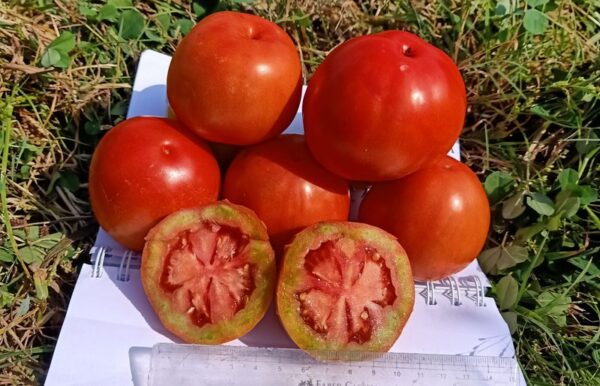
Chaudhary Sarwan Kumar Himachal Pradesh Agricultural University, Palampur, has achieved a major breakthrough with the development of two wilt-resistant tomato varieties, Him Palam Tomato-1 and Him Palam Tomato-2. These high-yielding varieties, developed by the Department of Vegetable Science and Floriculture, are resistant to bacterial wilt—a devastating disease that has long plagued tomato crops across the state.
Announcing the development, Vice-Chancellor Professor Naveen Kumar said that bacterial wilt is one of the most destructive challenges for tomato growers in Himachal Pradesh, particularly in the lower and mid-hill regions. The disease causes young plants to wither and turn yellow within 10–15 days of infection, often wiping out entire crops. Spread through soil and seeds, it thrives in high humidity and warm conditions. With no effective chemical treatment available, many farmers in severely affected areas had been forced to abandon the cultivation of tomatoes, capsicum, and chilies. Resistant varieties, therefore, remain the only practical solution.
After nearly two decades of dedicated research, scientists at the university have successfully developed Him Palam Tomato-1 and Him Palam Tomato-2, which combine strong resistance to bacterial wilt with high yield potential. The proposal for these varieties was approved at an agricultural officers’ workshop on May 4, 2024, and has been submitted to the State Variety Release Committee (SVRC) for final clearance. Once approved, seeds will be made available to farmers across Himachal Pradesh, enabling commercial tomato cultivation even in wilt-prone areas.
Congratulating the team of scientists, the Vice-Chancellor expressed hope that these varieties would revive tomato cultivation in disease-affected regions, enhance farmers’ incomes, and strengthen the state’s vegetable economy.