News
Has Trump’s Crime Crackdown in Washington Worked? It’s Complicated.

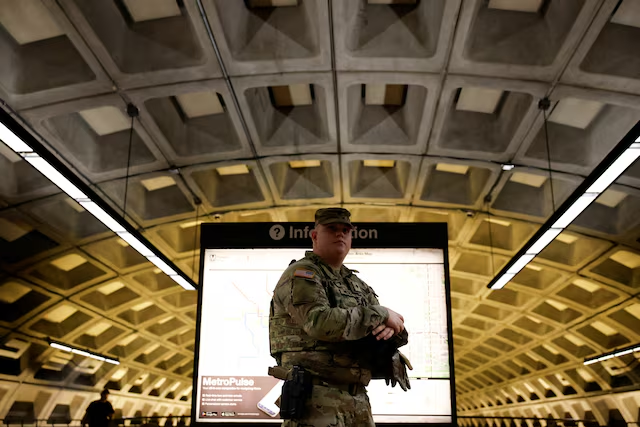
After deploying hundreds of federal agents and thousands of troops to the U.S. capital, former President Donald Trump has declared victory over what he called a “crime crisis” in Washington, D.C. He has even suggested using similar deployments across American cities as “training opportunities” for the military.
“This is now a very safe city. The country will be safe. We’ll do it one by one,” Trump said this week.
He has already ordered troops to Memphis, Tennessee, and told military leaders he plans to send forces to Chicago and other Democrat-led cities.
Yet it remains unclear whether Trump’s show of force in Washington had any meaningful or lasting effect on crime.
A Reuters review of public safety data and interviews with four crime experts found that it’s too early to draw firm conclusions. While certain types of crime—particularly gun-related offenses—have declined since the deployment began, overall violent crime levels have changed little.
“It makes no sense to make sweeping claims based on such an unusual and short-term intervention,” said Jeffrey Fagan, a law professor at Columbia University.
A spokesperson for Washington Mayor Muriel Bowser, a Democrat, declined to comment. Bowser has credited additional federal agents with helping reduce crime but said immigration raids and military deployment did not contribute to that progress.
White House spokesperson Abigail Jackson, in an email statement, countered: “It’s an objective fact that during the president’s 30-day emergency period, crime in D.C. dropped dramatically.”
Here’s what the data shows—and why measuring the impact is tricky.
Crime Naturally Fluctuates
Like most major cities, Washington’s Metropolitan Police Department gauges crime based on the number of incidents reported to or observed by police—specifically tracking homicides, assaults, robberies, and sexual offenses. Both city officials and the White House rely on these reports to discuss trends.
But these numbers are imperfect. Crimes may be reported days or weeks later—or not at all. Reporting rates can also shift based on public trust in the police.
According to census data, about one in seven Washington residents is an immigrant, and Fagan noted that some may hesitate to report crimes while police collaborate with immigration enforcement agents.
Police records show that before Trump’s crime crackdown, D.C. averaged about seven violent crimes per day. After the troop deployment began in mid-August, that average fell to five or six incidents per day—but rose again to roughly seven by the two weeks ending September 28.
Firearm-related violent crimes, however, dropped more sharply—from 97 cases in the four weeks before the deployment to 65 afterward.
“It’s hard to call that coincidence,” said Peter Moskos, a criminologist at John Jay College of Criminal Justice in New York City.
Crime Was Already Falling
The Trump administration argues the crackdown worked because overall crime reports during the 30-day period were lower than during the same time in 2024. Jackson said total crime fell 17%, homicides 50%, assaults with dangerous weapons 16%, and robberies 22%.
Yet both the D.C. police and the FBI had already reported a downward trend before Trump ordered troops into the city.
“You really need months of data before reaching a conclusion,” said Jeff Asher, a crime analyst at AH Datalytics. “If crime was already falling, you intervene, and it continues falling—what does that actually tell you?”
Violent crime in Washington peaked in 2023, when homicides reached their highest level in over two decades. In response, Bowser introduced a data-driven policing strategy focused on increased patrols in high-crime areas. Reported incidents have declined since.
Similar declines have been observed nationwide. Asher said data from over 500 police departments shows homicides fell by about 20% through July 2024 compared to the same period a year earlier.
A Modest Increase in Enforcement
According to an FBI report earlier this year, Washington already had one of the highest police-to-resident ratios in the nation.
Roughly 500 federal agents were added to work alongside 3,200 city police officers, a nearly 15% increase in enforcement capacity. More than 2,000 National Guard troops were also deployed, though they were legally barred from performing direct law enforcement duties.
Police bulletins show that total arrests rose less than 2% between July and August—from 2,593 to 2,641. Those figures include arrests made by local and federal police but exclude those by immigration authorities.
The city’s jail population also increased slightly—by about 7%, averaging 2,150 inmates per day during the crackdown, compared to roughly 2,000 before it began. Some detainees were awaiting trial, while others were serving short sentences for minor offenses.