World News
Scientists discover new blood group, solve 50-year-old mystery
The breakthrough solved a 50-year-old mystery involving the AnWj blood group antigen, which was first discovered in 1972.

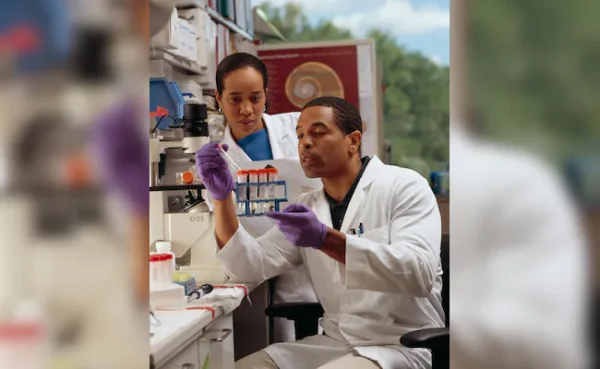
A team of scientists from NHS Blood and Transplant (NHSBT) and the University of Bristol have identified a new blood group system called MAL. The breakthrough solved a 50-year-old mystery involving the AnWj blood group antigen, which was first discovered in 1972.
The research team, led by senior research scientist Louise Tilly, has developed a genetic test to identify patients deprived of the AnWj antigen. This innovation will help in providing better care to rare patients and finding compatible blood donors. Tilly, who has devoted 20 years to this project, told the BBC, “It is challenging to find out the exact number of people who will benefit from this test. However, NHSBT is the last resort for around 400 patients every year worldwide.”
This discovery has far-reaching implications, which will benefit patients around the world. NHSBT’s International Blood Group Reference Laboratory at Filton provides antibodies to countries for research and has developed a test that can be added to an existing genotyping platform.
Key findings of the research:
- AnWj antigen: The team identified the genetic background of the AnWj antigen, enabling a better understanding and treatment of rare patients with this blood group deficiency.
- MAL blood group system: The discovery establishes MAL as the 47th blood group system, home to the AnWj antigen.
- Genetic causes: The researchers found homozygous deletions in the MAL gene associated with the inherited AnWj-negative phenotype.
- Transfusion safety: The study enables the development of new genotyping tests to detect rare AnWj-negative individuals, reducing complications associated with transfusion.
Blood group antigens are proteins on red blood cells, and a deficiency of these can cause serious reactions during transfusion. Laboratory technician and leukemia survivor Philip Brown stressed the importance of the discovery. “Having undergone numerous blood transfusions and bone marrow transplants, I understand first-hand the critical need for safe blood matching,” Brown told the BBC.
Nicole Thornton, head of the laboratory, noted the international significance of the discovery. “Unravelling the genetic basis of the AnWj antigen has been a major challenge. With this breakthrough, we can now design genotyping tests to identify patients and donors with this rare antigen,” Thornton explained.