Shimla News
Himachal Pradesh to set up 48 weather centres for rainfall and cloudburst warnings, Rs 890-crore project for climate risk reduction
In a significant step towards improving climate forecasts, the Himachal Pradesh government has signed a MoU with the India Meteorological Department (IMD) to set up 48 automated weather stations across the state. The initiative aims to improve early warning systems for rainfall, cloudbursts and other natural disasters.

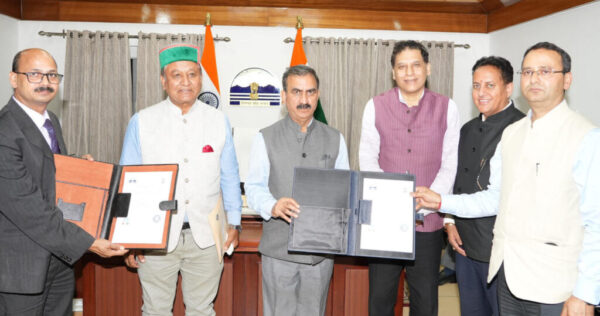
Shimla, 07 September: In a significant step towards improving climate forecasts, the Himachal Pradesh government has signed a MoU with the India Meteorological Department (IMD) to set up 48 automated weather stations across the state. The initiative aims to improve early warning systems for rainfall, cloudbursts and other natural disasters.
The weather centres will provide real-time data, thereby enhancing forecasting and disaster preparedness, especially in critical sectors like agriculture and horticulture. “This network will significantly improve the state’s ability to manage natural disasters, including flash floods, excessive rainfall and cloudbursts, through more accurate early warning and emergency response systems,” the chief minister said. The project will begin with the setting up of 48 stations and will eventually be expanded to the block level. Currently, 22 automated weather stations are already operational in the state, set up by the IMD.
In another significant development, the state has received Rs 100 crore for a project worth Rs 890 crore from the Agenc Française de Dévelopement (AFD) for the Comprehensive Disaster and Climate Risk Reduction Project. The initiative will focus on enhancing infrastructure, governance and institutional capacity to mitigate the effects of climate change.
Chief Minister Sukhu informed that the project will strengthen both the Himachal Pradesh State Disaster Management Authority (HPSDMA) and the District Disaster Management Authority (DDMAs), as well as upgrade Emergency Operation Centres (EOCs) at the state and district levels. The project also includes conducting Climate Change Vulnerability Assessments (CCVA) at the village level and developing a robust early warning system (EWS) for natural disasters.
Additional measures include expanding fire response capabilities by setting up new fire stations in under-served areas and upgrading existing stations to handle hazardous materials. Landslide mitigation will be enhanced through bioengineering nurseries and seismic resilient infrastructure will be developed across the state. Improved connectivity will be achieved through an advanced satellite network with continuous monitoring through a dedicated software platform.
The chief minister also announced plans to set up a state institute for disaster management and raise a new company of the State Disaster Response Force (SDRF) to boost local disaster response efforts. Helipads will also be constructed to enhance aerial disaster response capabilities.