Himachal Pradesh News
HPU and DRDO Join Hands to Strengthen Disaster Risk Reduction and Climate Resilience in the Himalayas
Himachal Pradesh University (HPU) and DRDO’s DGRE are exploring a strategic partnership to advance disaster risk reduction, climate resilience, geospatial technologies, and infrastructure protection across the Himalayan region.

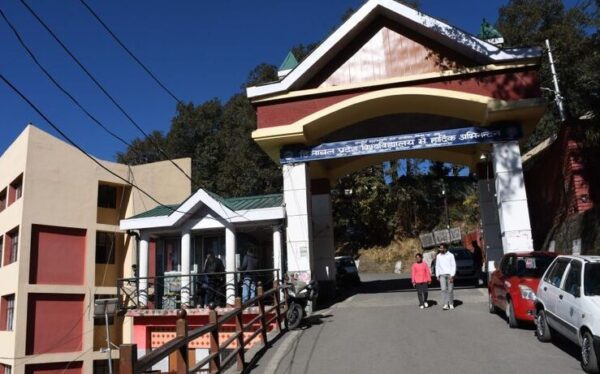
Himachal Pradesh University (HPU) and DRDO’s DGRE are exploring a strategic partnership to advance disaster risk reduction, climate resilience, geospatial technologies, and infrastructure protection across the Himalayan region.
HPU Explores Strategic Collaboration with DRDO for Himalayan Disaster Risk Reduction
Shimla: In a major development aimed at enhancing disaster preparedness and scientific research in the Himalayan region, Himachal Pradesh University (HPU) has initiated discussions with the Defence Geoinformatics Research Establishment (DGRE), a premier laboratory under the Defence Research and Development Organisation (DRDO), for long-term collaboration in disaster risk reduction and climate resilience.
The proposed partnership focuses on key areas such as geospatial technologies, hazard monitoring, climate adaptation, critical infrastructure protection, and strategic research related to the Himalayan ecosystem. The move is expected to strengthen scientific capabilities and improve disaster management strategies in Himachal Pradesh and other vulnerable mountain regions.
The discussions took place during a visit by Dr. P.K. Satyawali, Director of DGRE-DRDO, who held detailed talks with HPU Vice-Chancellor Prof. Mahavir Singh. Senior officials and researchers from both institutions participated in the meeting, including Prof. Nainjeet Singh Negi, Director of the Research and Development Cell at HPU, Dr. Mahesh Sharma from the Himalayan Centre for Disaster Risk Reduction and Resilience (HIM-DR³), and Dr. Simranjit Singh, Scientist ‘G’ at DGRE-DRDO.
Focus on Disaster Preparedness and Scientific Monitoring
One of the key areas of discussion was the deployment of Automatic Weather Stations (AWS), advanced hazard monitoring systems, and scientific studies that could support the preparation of Detailed Project Reports (DPRs) for strategic infrastructure projects across Himachal Pradesh.
Experts believe that better monitoring and forecasting systems can play a crucial role in reducing the impact of natural disasters such as flash floods, landslides, and extreme weather events, which have become increasingly frequent in Himalayan regions due to climate change.
HPU Showcases Advanced Flash Flood Research
During the meeting, Dr. Mahesh Sharma presented the hydrodynamic modelling framework developed by HIM-DR³. The innovative system is currently being used to assess flash-flood behaviour, improve risk-informed planning, and support resilience-building efforts in disaster-prone Himalayan areas.
Impressed by the research, Dr. P.K. Satyawali invited the HPU team to deliver a detailed technical presentation before DGRE scientists. The presentation is expected to open new avenues for joint research projects and technology development initiatives.
Strengthening Academia–Defence Research Partnerships
Highlighting the university’s growing emphasis on innovation and applied research, Vice-Chancellor Prof. Mahavir Singh noted that HPU has established five multidisciplinary research centres dedicated to interdisciplinary studies, capacity building, and national development.
According to university officials, these centres are designed to serve as hubs of excellence that can contribute meaningful solutions to societal and environmental challenges while supporting strategic national interests.
Joint Research Proposal to Be Submitted Soon
Both HPU and DGRE-DRDO expressed strong interest in building a long-term partnership focused on mutual research goals. As part of the next steps, the institutions have agreed to prepare and submit a joint project proposal aimed at facilitating collaborative research and technological advancement.
The initiative marks a significant milestone in fostering cooperation between academia and defence research organizations. Experts believe such partnerships can play a crucial role in improving disaster resilience, environmental sustainability, and strategic preparedness across the Himalayan region.