World News
Nepal PM Balen Shah Sparks Fresh Border Debate, Calls for UK and China’s Involvement
Nepal Prime Minister Balen Shah has reignited the long-standing border dispute with India by urging the involvement of both the United Kingdom and China in resolving the contentious Lipulekh-Kalapani-Limpiyadhura issue.

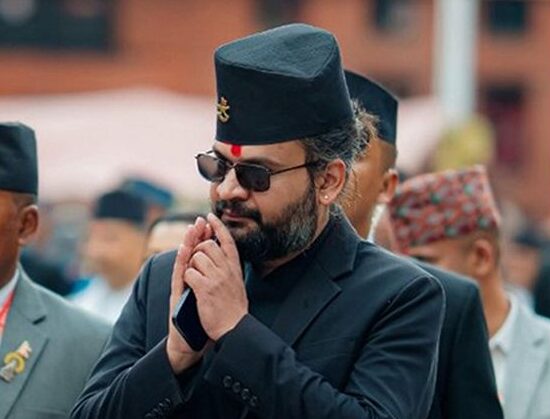
Nepal Prime Minister Balen Shah has reignited the long-standing border dispute with India by urging the involvement of both the United Kingdom and China in resolving the contentious Lipulekh-Kalapani-Limpiyadhura issue.
Speaking in Nepal’s Parliament on Sunday, Shah said that Nepal and India have been engaged in discussions involving historians, surveyors, and border experts to find a solution to the decades-old disagreement. However, he also argued that the United Kingdom should play a role in the process, citing the historical roots of the dispute dating back to British colonial rule.
“We have held discussions not only with India and China but also with Britain. Our view is that Britain should also show concern regarding this issue,” Shah told lawmakers.
Why Is Nepal Seeking Britain’s Involvement?
The border dispute traces its origins to the 1816 Treaty of Sugauli, which was signed between Nepal and British India after the Anglo-Gorkha War. The treaty defined the western boundary of Nepal based on the Kali River, but disagreements over the river’s actual source have continued for more than two centuries.
According to Nepal, historical maps prepared during British rule indicate that the Kalapani, Lipulekh, and Limpiyadhura regions belong to Nepal. India, however, maintains that the current boundary is consistent with historical agreements inherited after independence in 1947.
Because Britain played a key role in drawing the original borders, Nepal believes London should help address the historical aspects of the dispute.
The Core of the Kalapani-Lipulekh Dispute
The disagreement largely centers on the origin of the Kali River, which serves as a crucial reference point in the boundary definition.
Nepal argues that the river originates from the Limpiyadhura area, placing Kalapani, Lipulekh, and surrounding territories within Nepalese borders. India, on the other hand, maintains that the Kali River begins near the Kalapani springs after several streams merge, supporting India’s current territorial claims.
These differing interpretations have fueled diplomatic tensions between the two neighbors for decades.
2020 Road Project Reignited the Issue
The border issue gained renewed attention in 2020 when India inaugurated a strategic road connecting Dharchula in Uttarakhand to Lipulekh Pass, a key route used by pilgrims traveling to Kailash Mansarovar.
In response, Nepal released a revised political map that included Kalapani, Lipulekh, and Limpiyadhura within its territory. The map was later incorporated into Nepal’s Constitution through a constitutional amendment, further intensifying the dispute.
India Yet to Respond
India’s Ministry of External Affairs has not officially responded to Shah’s latest remarks regarding alleged encroachment or Nepal’s proposal for greater British involvement in the matter.
Despite periodic disagreements over border issues, India and Nepal continue to share deep cultural, economic, and people-to-people ties. The two countries also maintain an open border stretching approximately 1,751 kilometers.
Nepal Clarifies ‘Encroachment’ Remarks
Following Shah’s comments, Nepal’s Foreign Ministry clarified that his remarks regarding “encroachment” were linked to instances of cross-border occupation and settlement rather than a new territorial claim.
According to the ministry, there are areas along the India-Nepal border where citizens from both countries occasionally cultivate land or settle across the boundary, creating localized disputes that require administrative resolution.
What Happens Next?
With Nepal now advocating broader international engagement, including the participation of Britain and China, the Lipulekh-Kalapani issue is once again in the spotlight. While both India and Nepal have repeatedly emphasized dialogue as the preferred path forward, the differing interpretations of historical records and geographical boundaries continue to make the dispute one of South Asia’s most sensitive border issues.
As diplomatic discussions continue, experts believe that any lasting solution will likely require a combination of historical research, technical surveys, and sustained political dialogue between the two neighboring countries.