World News
Israel Kills Iran Intelligence Chief, Targets South Pars Gas Field in Major Escalation
In a dramatic escalation of tensions, Israel launched a series of high-impact strikes on Iran Monday, targeting critical energy infrastructure and killing a top intelligence official in what analysts are calling one of the most aggressive moves in the ongoing conflict.

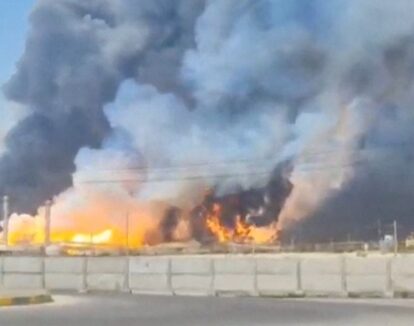
In a dramatic escalation of tensions, Israel launched a series of high-impact strikes on Iran Monday, targeting critical energy infrastructure and killing a top intelligence official in what analysts are calling one of the most aggressive moves in the ongoing conflict.
Among those killed was IRGC intelligence chief Majid Khademi, a key figure in Iran’s security establishment. Confirming the operation, Israeli Defence Minister Israel Katz stated that the strikes were aimed at “eliminating terrorist leadership” amid ongoing attacks on civilians.
The airstrikes didn’t stop there.
Israel also hit infrastructure linked to the South Pars gas field, the world’s largest natural gas reserve and the backbone of Iran’s energy sector. Located near the coastal hub of Asaluyeh, the region witnessed multiple explosions, according to Iran’s Fars News Agency.
Why South Pars Matters
The South Pars field is not just another energy site—it supplies nearly 70% of Iran’s natural gas and supports roughly half of the country’s petrochemical production. Any damage here has far-reaching economic and strategic implications, both for Iran and global energy markets.
Israeli officials claimed the strike specifically targeted major petrochemical facilities, signaling a shift toward hitting Iran’s economic lifelines rather than just military assets.
Rising Casualties and Retaliation
The strikes are part of a broader wave of coordinated military action involving both Israel and the United States. Reports indicate that at least 25 people were killed in the latest round of attacks.
In retaliation, Iran launched drones and missiles toward Israel and targets in the Gulf region. One missile strike in Haifa reportedly hit a residential building, killing at least two civilians and raising fears among residents already on edge.
High-Profile Losses for Iran
Khademi’s death adds to a growing list of senior Iranian officials killed in recent weeks, including security chief Ali Larijani and IRGC commander-in-chief Mohammad Pakpour. The repeated targeting of top leadership signals a calculated effort to weaken Iran’s command structure.
US Role and Military Presence
The United States continues to play a critical supporting role. The US Central Command recently showcased its HIMARS rocket systems, which have been instrumental in long-range precision strikes under what officials are calling Operation Epic Fury.
While former US President Donald Trump earlier stated he was not informed about previous strikes on Iranian gas facilities, he acknowledged Israel’s commitment to avoiding “sensitive targets”—a line that now appears to be shifting.
Nuclear Concerns Add to Tensions
Adding another layer of concern, the International Atomic Energy Agency (IAEA) confirmed that recent strikes occurred dangerously close—within 75 meters—of Iran’s Bushehr Nuclear Power Plant.
Although the plant itself remains undamaged, the proximity of the attacks has raised alarms globally. Iranian officials have sharply criticized the IAEA, accusing it of failing to respond adequately to repeated threats near nuclear infrastructure.