News
From exile in India, Sheikh Hasina slams Bangladesh election, warns of ‘prolonged instability’
Bangladesh’s ousted Prime Minister Sheikh Hasina has strongly criticised the country’s upcoming general election, warning that the vote risks deepening political instability after her party, the Awami League, was barred from participating.

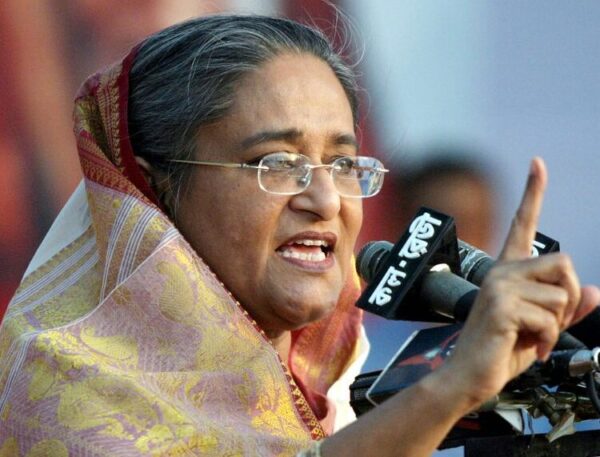
Bangladesh’s ousted Prime Minister Sheikh Hasina has strongly criticised the country’s upcoming general election, warning that the vote risks deepening political instability after her party, the Awami League, was barred from participating.
Writing from exile in India in an email to The Associated Press, Hasina said Bangladesh cannot achieve stability without an inclusive, free and fair electoral process. She accused the interim administration of disenfranchising millions of voters by excluding her party from the polls scheduled for February 12.
“Each time political participation is denied to a significant portion of the population, it deepens resentment, delegitimizes institutions and creates the conditions for future instability,” she said.
“A government born of exclusion cannot unite a divided nation.”
Election amid political turmoil
More than 127 million Bangladeshis are eligible to vote in what is being described as one of the country’s most consequential elections in decades. It will be the first national vote since Hasina’s dramatic fall from power in August 2024 following a violent student-led uprising that ended her 15-year rule.
Hasina was later sentenced to death in absentia over her government’s crackdown on protesters — charges she has rejected, calling the trial politically motivated and a “kangaroo court.”
The interim government, led by Nobel Peace Prize laureate Muhammad Yunus, is overseeing the election and has promised a transparent and fair process. Campaigning began last week across Dhaka and other regions, alongside a proposed constitutional referendum that could bring sweeping reforms.
Yunus’ office has said security forces will ensure peaceful polling and prevent coercion or violence. Around 500 international observers, including representatives from the European Union and the Commonwealth, are expected to monitor the vote.
Concerns over inclusivity and security
Despite these assurances, concerns persist over whether the election will be genuinely inclusive without the Awami League, which governed Bangladesh for over a decade.
Since Hasina’s ouster, the country has faced mounting political and security challenges. Human rights groups have alleged arbitrary arrests and custodial deaths of Awami League supporters, accusations the interim government denies.
There are also fears about growing Islamist influence, attacks on minorities — particularly Hindus — and increasing pressure on the media. Several journalists face criminal cases, while protests have targeted major newspaper offices.
Opposition stakes claim
The Bangladesh Nationalist Party (BNP), led by Tarique Rahman, has emerged as the frontrunner in the race. Rahman, the son of former Prime Minister Khaleda Zia, returned to Bangladesh last month after years in exile and has pledged to restore stability.
He faces competition from an 11-party alliance led by the Islamist Jamaat-e-Islami, which was previously barred from elections under Hasina’s administration.
The BNP had boycotted earlier elections in 2014 and 2024, alleging vote-rigging, and only briefly contested the 2018 polls.
Call for reconciliation
Acknowledging Bangladesh’s deeply polarised politics, Hasina said the nation must break what she described as a cycle of boycotts and exclusions.
“I recognize this was far from ideal,” she said, referring to past elections under her leadership. “But if political forces continue to shut each other out, there will be no redemption.”
She added that Bangladesh needs “a legitimate government” formed with the “genuine consent of the people” to move forward.
“That is the best way for the nation to heal its wounds,” she said.