World News
US Lawmakers Urge Bangladesh to Avoid Party Bans, Warn Against Flawed Tribunal Ahead of February Polls
Ahead of Bangladesh’s February elections, US lawmakers have cautioned the interim government against banning political parties or reviving a flawed war crimes tribunal, warning such moves could undermine democratic credibility and voter confidence.

As Bangladesh prepares for general elections in February amid sustained political tension, a group of US lawmakers has cautioned the country’s interim administration against banning political parties or reviving what they described as a “flawed International Crimes Tribunal”, warning that such steps could undermine the credibility of the electoral process.
The lawmakers instead called for an inclusive and credible democratic transition, stressing the importance of broad political participation ahead of the polls.
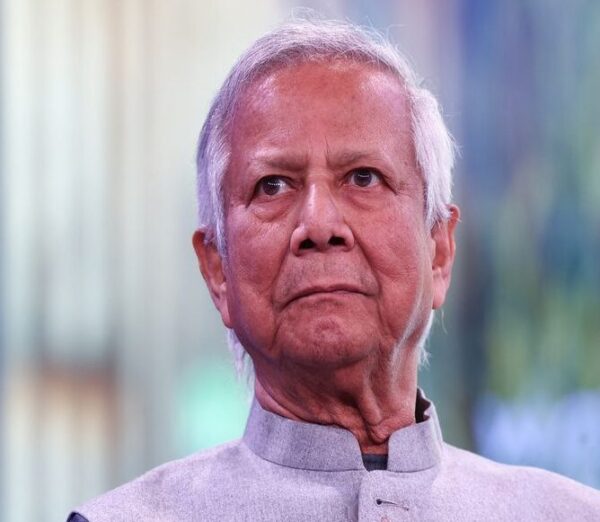
The warning comes as Interim Chief Adviser Muhammad Yunus has reaffirmed that national elections will be held on February 12, saying the country is working to restore democratic rights that were weakened under an autocratic system.
In a letter to Yunus, US Representatives Gregory W Meeks, Bill Huizenga and Sydney Kamlager-Dove expressed concern that suspending political organisations could disenfranchise large sections of the electorate and weaken democratic legitimacy at a critical moment.
“We welcome your willingness to step forward at a moment of national crisis in Bangladesh to lead an interim government ahead of elections in February,” the lawmakers wrote.
They emphasised that the interim administration should engage with political parties across the spectrum to create conditions for free and fair elections, allowing citizens to peacefully express their will through the ballot.
However, they warned that this objective would be difficult to achieve if the government moved ahead with banning political parties or reactivating the International Crimes Tribunal in its current form. Such actions, they said, risk further eroding already fragile public confidence in state institutions.
Placing their concerns in a broader context, the lawmakers referred to past elections, noting that the US Department of State and other international observers had concluded that Bangladesh’s 2018 and 2024 general elections were neither free nor fair.
The letter also cited a February report by the UN Office of the High Commissioner for Human Rights, which estimated that around 1,400 people were killed by security forces during protests in July and August 2024.
“Genuine accountability for these acts should reflect the values of Bangladesh’s democracy, rather than perpetuate a cycle of retaliation,” the lawmakers said.
They underlined that freedom of association and individual — not collective — criminal responsibility are core human rights principles, adding that suspending an entire political party runs counter to these norms.
The concerns come amid recent political developments, including the banning of the Awami League on May 10, 2025, after the interim government prohibited all party activities under the Anti-Terrorism Act. Two days later, the Election Commission suspended the party’s registration.
Calling for a review of such decisions, the lawmakers said Yunus or any future elected government should reconsider measures that restrict political participation. They stressed that the people of Bangladesh “deserve to choose an elected government in a free and fair election in which all political parties can participate”.
Describing Bangladesh as a “critical partner” of the United States, the lawmakers said Washington remains ready to work with Dhaka to support both bilateral relations and the country’s democratic transition in the months ahead.
Earlier, US Special Envoy for South and Central Asia Sergio Gor held a phone conversation with Muhammad Yunus and praised his leadership during recent trade negotiations, which resulted in the US reducing reciprocal tariffs on Bangladeshi goods to 20 per cent.