News
Hamas’ Response to Trump’s Peace Plan Gains Hardline Backing, Raising Hopes for Hostage Release

The Palestinian Islamic Jihad, a hardline ally of Hamas that also holds hostages, on Saturday endorsed Hamas’ response to the U.S. plan to end the Gaza war — a move that could pave the way for the release of Israelis still being held captive by both groups.
Hamas, which governs Gaza, accepted key parts of President Donald Trump’s proposal on Friday, including an end to the conflict, Israel’s withdrawal, and a swap involving the release of Israeli hostages and Palestinian prisoners.
The group’s response sparked a wave of optimism among world leaders, urging an immediate end to what has become the deadliest conflict involving Israel since 1948, and calling for the freedom of the remaining Israelis held in Gaza.
Peace hopes received another boost from a statement of support issued by Iran-backed Islamic Jihad — a smaller but more hardline faction than Hamas.
“The response from Hamas reflects the shared stance of the Palestinian resistance movements,” the group said. “Islamic Jihad participated responsibly in the consultations that led to this decision.”
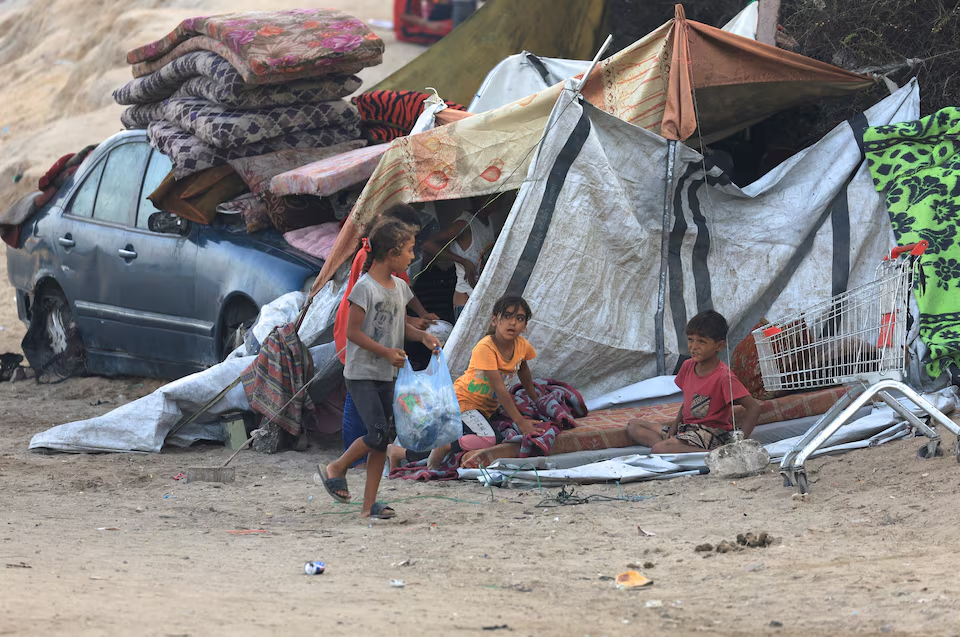
The alignment between Hamas and Islamic Jihad could revive the spirits of Gazans, who have witnessed repeated failures of cease-fire efforts amid devastating Israeli bombardments that have displaced millions and triggered a severe humanitarian crisis.
“Inshallah, the suffering of Gaza’s people will end,” said Sharif al-Fakhouri, a resident of Hebron in the occupied West Bank. “The people of Gaza are among the most oppressed on earth — any glimmer of hope for them is a victory.”
Others remained cautious, fearing that Israeli Prime Minister Benjamin Netanyahu, who heads Israel’s most right-wing government in history, might ultimately reject any peace arrangement.
“The real question is whether Netanyahu will sabotage it,” said Jamal Shihada, a Jerusalem resident. “Now that Hamas has agreed, he will likely disagree — as he often does.”
The Israeli military’s Arabic spokesperson on Saturday warned residents that Gaza City remains a “dangerous combat zone,” urging civilians to avoid moving north or entering military-controlled areas.
Earlier reports from Axios indicated that the Israeli army would now shift its focus toward defensive operations and halt plans to seize Gaza City.
Though Israeli airstrikes continued Saturday morning, they were reportedly less intense after President Trump urged a halt to bombings, declaring that Hamas was ready for peace.
Gaza’s Health Ministry said that at least 66 Palestinians were killed in Israeli shelling over the previous 24 hours.
Netanyahu’s office said Israel was preparing for the “immediate implementation” of the first phase of Trump’s Gaza plan — which includes the release of Israeli hostages — following Hamas’ response. Soon after, Israeli media reported that the country’s leadership had ordered a reduction in offensive operations in Gaza.
Trump’s plan and Hamas’ reaction drew widespread support — from Australia, India, Canada, and across European capitals. “The end of this horrific war is near,” Dutch Prime Minister Dick Schoof said.
Israel’s military chief directed his forces to intensify preparations for the plan’s first phase, though it remains unclear whether this will translate into a pullback on the ground.
Trump’s 20-point peace proposal came with a warning to Hamas: accept it by Sunday or face “severe consequences.” The former president, who has poured significant political capital into ending the conflict, called Hamas “ready for lasting peace” and placed responsibility squarely on Netanyahu’s government. “Israel must stop bombing Gaza immediately so we can get the hostages out safely and quickly!” Trump wrote on Truth Social.
Netanyahu now faces growing domestic pressure — from hostage families and a war-weary public — to end the fighting, while balancing demands from far-right coalition partners who insist Israel must not ease its campaign in Gaza.
Israel launched its military offensive on October 7, 2023, after Hamas-led attacks that killed about 1,200 people and resulted in 251 hostages being taken, according to Israeli figures. Israel says 48 hostages remain, including 20 believed to be alive. Gaza’s health authorities report that Israel’s campaign has killed more than 67,000 Palestinians — mostly civilians — and devastated much of the enclave, where aid restrictions have led to famine-like conditions.