News
High Court Clarifies: Backward Class (BC) Quota Valid Only in Parent State, Not Place of Birth

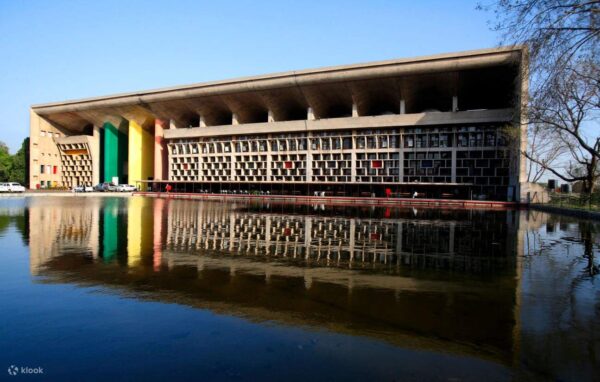
In a significant ruling on the portability of caste-based reservation, the Punjab and Haryana High Court has clarified that reservation benefits under the Backward Class (BC) category are applicable only in a person’s parent state of origin, and not in the state of birth or subsequent residence.
The Court dismissed a petition filed by a candidate who had sought BC quota benefits in Punjab while applying for recruitment with the Punjab State Power Corporation Limited (PSPCL). The bench held that the petitioner was entitled to BC reservation only in Himachal Pradesh, where his family’s permanent residence was located, not in Punjab.
Justice Harpreet Singh Brar, while rejecting the plea, stated:
“The petitioner can claim reservation under the Backward Class category only in the State of Himachal Pradesh, where his father had a permanent residence since its creation in 1966.”
Background of the Case
The petitioner had qualified the GATE examination with 30 marks out of 100, meeting the 22.5% cut-off for the BC category, and subsequently applied for the post of Assistant Engineer/OT (Electrical) with PSPCL. During document verification, objections were raised against his claim under Punjab’s BC category, as he had submitted a self-declaration stating permanent residency in Punjab since birth in 2000.
Court’s Analysis on Lineage and Migration
Tracing the petitioner’s family history, the Court held his claim to Punjab’s BC quota as untenable. It noted that his grandfather hailed from Gondpur Banehra village, which, before the reorganization of states in 1966, was part of Hoshiarpur district in the erstwhile Punjab. After reorganization, however, the village became part of Una district in Himachal Pradesh.
The Court recorded:
“The petitioner’s father secured employment with the Bureau of Immigration and moved to Amritsar district, Punjab, in 1991. The petitioner was later born in Amritsar in 2000.”
Referring to a 2002 clarification by the Ministry of Social Justice and Empowerment, the Court emphasized that caste-based reservation eligibility is determined by the permanent residence of the father at the time of the Presidential notification, not by the child’s place of birth.
The bench observed:
“Although the petitioner’s grandfather was a resident of the erstwhile Punjab, the petitioner’s father had been a resident of Himachal Pradesh since its creation in 1966. His relocation to Punjab in 1999 does not make the family original residents of that state.”
Constitutional Concerns on Portability
The Court warned that accepting such claims would undermine the constitutional scheme of equitable distribution of benefits:
“Granting the petitioner recruitment under Punjab’s BC category would deprive a genuinely eligible candidate belonging to the backward classes of Punjab of their rightful opportunity.”
Justice Brar underlined that caste/community-based reservations are not portable across states:
“A person’s parent state is determined not by the place of birth, but by the permanent residence of the parents at the time of the relevant notification. The idea of ‘backwardness’ is contextual and regional. Though a person may migrate, the socio-economic disadvantages historically faced by a community are tied to its original geographical region and do not automatically transfer with migration.”
The bench further noted that portability would contradict equality:
“Permitting state-to-state portability of reservation benefits would violate the principle of equitable distribution of resources envisaged by the Constitution, as it would deprive disadvantaged groups in the native state of their rightful share.”
Examination of Documents
The Court also reviewed revenue records showing the family’s ancestral property in Una. It reiterated that migration after the Presidential notification does not alter the “original state” of entitlement:
“Migrants and their descendants will continue to be treated as migrants and cannot claim reservation benefits in the migrated state.”
Concluding, the Court held:
“Since 1966, the erstwhile Punjab ceased to exist, and the ancestral residence of the petitioner’s family—Una Tehsil—has been part of Himachal Pradesh. The family’s link to this original geographical area cannot be extinguished by their relocation to Punjab in 1999. Hence, the petitioner is entitled to BC benefits only in Himachal Pradesh.”
Accordingly, the High Court dismissed the petition seeking relief under Punjab’s BC category.