News
Trump Promotes Peace Plan Ahead of Netanyahu Talks as Israeli Tanks Push Deeper Into Gaza

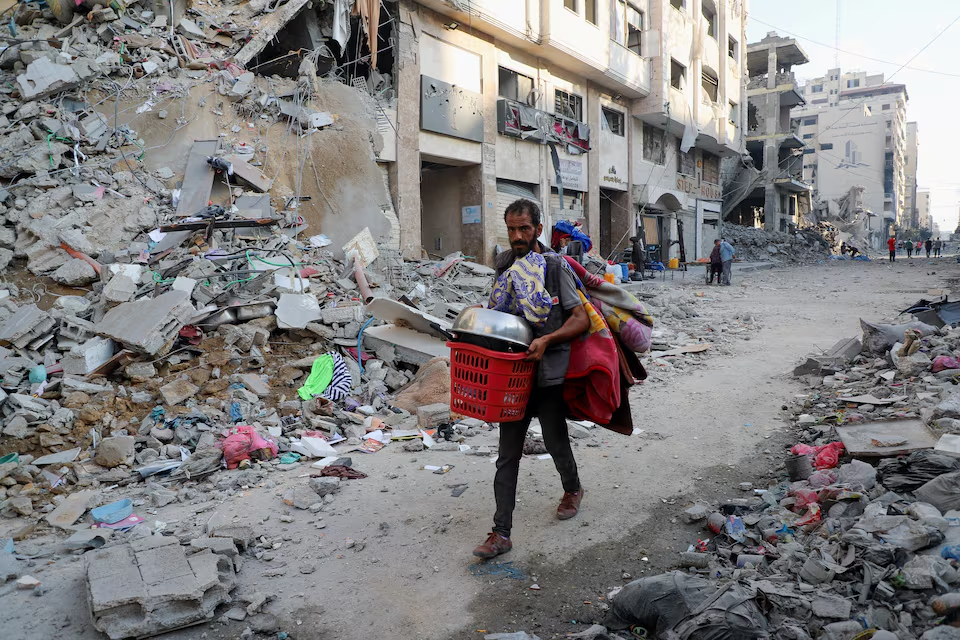
Hours before hosting Israeli Prime Minister Benjamin Netanyahu at the White House on Monday, U.S. President Donald Trump vowed to deliver “something special” in his latest push to end the Gaza war, even as Israeli tanks advanced further toward the center of Gaza City.
After nearly two years of stalled diplomacy, Washington last week presented Arab and Muslim nations with a 21-point proposal calling for a permanent ceasefire and the release of remaining hostages. Trump said he believes an agreement is “almost done.”
Posting on social media Sunday, he wrote: “We have a real opportunity for greatness in the Middle East. For the first time, everyone is ready for something special. We will get it done!!!”
Israeli and Arab Reservations
Despite Netanyahu’s praise for Trump as Israel’s closest ally, Israeli skepticism about the plan remains, as do concerns among Arab states. Two foreign diplomats in the region described the 21-point plan as a set of broad objectives rather than a detailed blueprint. They said Israel has objected to several elements and is seeking revisions, while Arab governments are also pressing for changes.
According to Egyptian sources involved in ceasefire mediation, Cairo is particularly concerned that the internationally recognized Palestinian Authority should not be sidelined from Gaza’s administration and that Israel must guarantee compliance with any agreement after hostages are freed.
On the ground, Palestinians remain doubtful. “Trump has made promises before that turned out to be false,” said Huda, sheltering with her two children in Deir al-Balah. Abu Abdullah, camped with relatives on the Gaza shoreline, said his family would decide whether to flee south after the White House meeting: “Either there will be peace, or Gaza City will be erased like Rafah.”
Escalation in Gaza
Meanwhile, Israel has launched one of its largest offensives of the war, with tanks pushing to within a few hundred meters of Gaza City’s main Al Shifa hospital. Another hospital, Al Helo, housing 90 patients including 12 infants in incubators, has been surrounded by tanks and subjected to heavy shelling.
UNICEF urged the urgent evacuation of babies in incubators across Gaza City. “It is time to move them because Gaza City has once again become a battlefield — but where can they go? There is no safe place,” said UNICEF spokesman Ricardo Pires.
Israeli forces have continued to demolish Hamas facilities with explosives, leaving swathes of neighborhoods in ruins. Doctors reported that at least 30 Palestinians were killed on Monday, most of them in Gaza City.
Israel has vowed not to stop fighting until Hamas releases all hostages and permanently disarms. Hamas, for its part, says it will free hostages only in exchange for ending the war and insists it will not surrender its weapons while Palestinians continue to fight for statehood.
According to Israeli figures, Hamas-led militants killed around 1,200 people and took 251 hostages in their assault nearly two years ago. Gaza health officials say more than 66,000 Palestinians have since been killed in Israeli attacks. The mounting toll has deepened Israel’s international isolation, with countries including Britain and France moving to recognize Palestinian statehood over Israeli objections.
Political Pressure
Inside Israel, the offensive has intensified political divisions. Netanyahu’s right-wing ministers continue to press for the war’s continuation, while families of hostages argue that it is time to strike a peace deal.
In a letter sent to Trump before his meeting with Netanyahu, relatives of hostages pleaded with him not to allow anyone to derail the negotiations. “The stakes are too high,” they wrote. “Our families have waited far too long to see this progress undermined.”