News
Macron Says UN Sanctions on Iran Will Be Reimposed

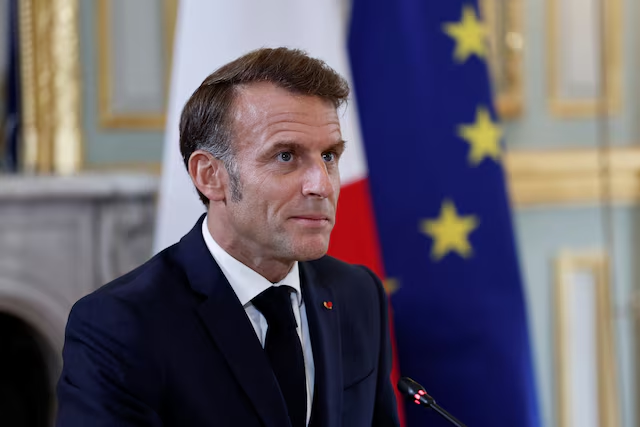
French President Emmanuel Macron said on Thursday that European powers could reimpose international sanctions on Iran by the end of this month, after recent talks with Tehran aimed at averting such measures were deemed unserious.
Britain, France, and Germany—the so-called E3—initiated a 30-day process at the end of August to restore United Nations sanctions. They had set conditions for talks with Tehran in September to persuade Iran to delay triggering the “snapback mechanism.”
The E3 had offered to postpone the snapback for six months on the condition that Iran restore access for UN nuclear inspectors—who would also account for Tehran’s large stockpiles of enriched uranium—and resume negotiations with the United States.
In an interview with Israel’s Channel 12, when asked if the snapback was a done deal, Macron replied:
“Yes. I believe so, because the latest signals we’ve received from the Iranians are not serious.”
A phone call on Wednesday between the foreign ministers of the E3, the EU’s foreign policy chief, and their Iranian counterpart added a new twist. Diplomats on both sides acknowledged that no tangible progress had been made, though they left the door open for a possible agreement before the deadline expires.
Meanwhile, the 15-member UN Security Council is set to vote on Friday on a resolution that would permanently lift UN sanctions on Iran—a step required after the E3 initiated the process.
Diplomats say the resolution is unlikely to secure the nine votes needed to pass. And even if it did, the United States, Britain, or France would almost certainly veto it.