News
After Unrest, Former Chief Justice Karki Appointed Nepal’s First Female Leader

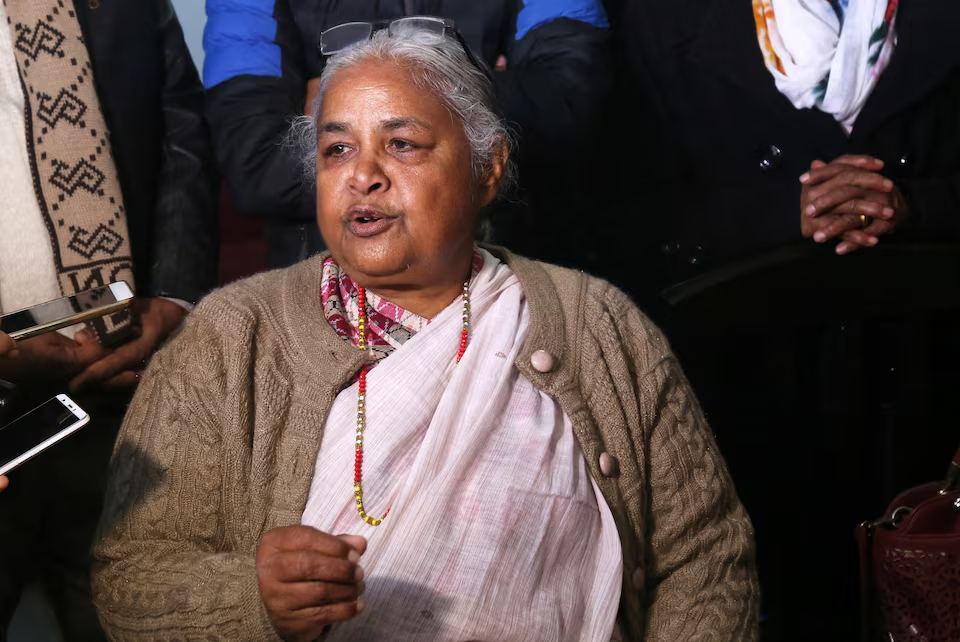
Former Chief Justice Sushila Karki is set to become the first woman to lead Nepal. The appointment comes after violent anti-corruption protests forced Prime Minister K.P. Sharma Oli to resign. She is scheduled to be sworn in as interim leader on Friday, the President’s office announced.
The appointment was confirmed following consultations between President Ram Chandra Poudel, Army Chief Ashok Raj Sigdel, and protest leaders who had spearheaded one of the worst upheavals the country has seen in years.
The anti-corruption protests, led by the ‘Gen Z’ movement, resulted in 51 fatalities and over 1,300 injuries this week. The movement, largely supported by younger citizens, was triggered by a social media ban that has since been lifted. Violence subsided after Oli stepped down on Tuesday.
Karki, 73, will take the oath at 9:15 PM local time (3:30 PM GMT), according to Archana Khadka, spokesperson for the President’s office. Local television reports indicate that two other ministers will also be sworn in alongside her.
As the only woman to have served as Nepal’s Chief Justice, Karki was widely favored by protesters, who cited her integrity, commitment, and stance against corruption. She served in the judiciary’s highest post for nearly a year until mid-2017.
A Return to Normalcy
Since abolishing its monarchy in 2008, Nepal has grappled with political and economic instability. Widespread unemployment has driven millions to seek work abroad, sending remittances back home.
On Friday, as the country of 30 million began returning to normalcy, shops reopened, traffic resumed, and police replaced firearms with batons in maintaining order. Families retrieved the bodies of protest victims from hospitals and morgues.
Though some roads remain blocked and military patrols are lighter, life is slowly stabilizing.
At Kathmandu’s Teaching Hospital, Karuna Budhathoki anxiously awaited the body of her 23-year-old nephew. She said, “While his friends backed away from the protests, he chose to move forward. We were later informed he was brought to the hospital dead.”
In another case, relatives reported that 24-year-old protester Asahab Alam Thakurai, who had been married just a month earlier, lost his life. His uncle, Zulfikar Alam, recalled, “The last time we spoke to him, he told us he was trapped in the protest. After that, we couldn’t reach him. Finally, we found him at the morgue.”