News
Heavy rain causes cracks and leakage at ancient Baijnath temple

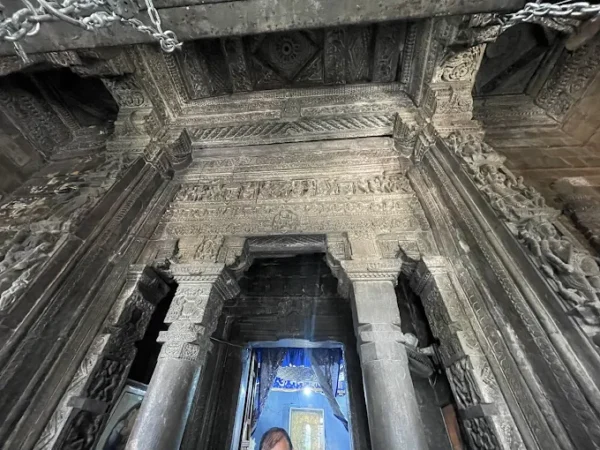
The historic Baijnath Shiva temple, built in 1204 AD, has suffered damage following two weeks of heavy rainfall in the Palampur region.
Cracks have appeared in the temple’s retaining walls along the Binwa river, while water seepage is visible from the roof and walls. Dampness on the floor has also made it difficult for priests to sit inside the sanctum.
According to locals, the temple management first flagged the issue of leakage in 2016. Several attempts have since been made to address the problem, but it has persisted.
Baijnath SDM Sankalp Gautam told that the structure faces no immediate threat. He assured that the Archaeological Survey of India (ASI), which has full responsibility for the temple’s repair and maintenance, will carry out the necessary restoration work.
Situated on the left bank of the Binwa river, the temple is a major tourist attraction, drawing lakhs of domestic and foreign visitors every year. Lord Shiva is worshipped here in the form of Vaidyanath, and legend holds that the temple was built by two local merchant brothers, Ahuka and Manyuka. Tradition also links the shrine to Ravana, the king of Lanka, who is believed to have worshipped Lord Shiva here.
The ASI has already begun work to repair the leaking roof and walls. Over the past three decades, it has spent several lakhs of rupees on the temple’s upkeep and development. A trust, chaired by the Baijnath SDM, oversees the temple’s day-to-day management.