Himachal Pradesh News
Kangra Valley Protests Grow as Residents Demand Restoration of Historic Train Services
Frustration is mounting in Himachal Pradesh’s scenic Kangra Valley as hundreds of residents took to the streets on Monday, demanding the immediate restoration of train services on the historic Pathankot–Joginder Nagar railway line.

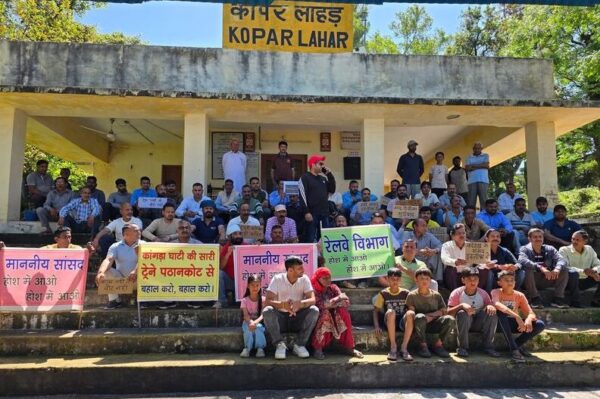
Frustration is mounting in Himachal Pradesh’s scenic Kangra Valley as hundreds of residents took to the streets on Monday, demanding the immediate restoration of train services on the historic Pathankot–Joginder Nagar railway line.
The protest, held at Kophar Lahar near Kangra, saw participation from locals across different walks of life—students, traders, daily commuters, and tourism stakeholders—all united by a common concern: the prolonged suspension of a crucial transport lifeline.
“Our Lifeline Has Been Ignored,” Say Protesters
Voicing strong dissatisfaction, protesters accused railway authorities of showing continued neglect and indifference toward their long-pending demand. They emphasized that the disruption has deeply affected everyday life in the region.
“This railway line is not just transport—it’s our lifeline,” said one protester, highlighting the struggles faced by people who rely on it for work, education, and healthcare access.
Residents also expressed disappointment with local leadership, alleging that Member of Parliament Rajiv Bhardwaj has failed to take strong action or effectively raise the issue with Railway Minister Ashwini Vaishnaw.
Economic and Tourism Impact Worsens
The suspension of services has triggered a ripple effect across the local economy. Small businesses, traders, and tourism operators report significant losses, as the railway line has long been a major attraction for visitors.
With transportation costs rising, many locals are now forced to rely on costlier and less convenient alternatives, adding financial strain to already struggling households.
A Heritage Railway with Deep Roots
The Pathankot–Joginder Nagar railway line, a narrow-gauge track built during the British era, has been operational since 1929. Spanning over 160 kilometers, it is widely regarded as one of the most picturesque train journeys in North India.
Passing through lush green valleys, tea gardens, tunnels, and charming hill stations, the route is not only vital for connectivity but also holds immense cultural and historical significance.
For decades, it has served as an affordable and dependable mode of transport, especially for remote hill communities.
Demand for Accountability and Clear Timeline
Despite multiple assurances from authorities, residents claim that no concrete steps have been taken to expedite restoration work.
Protesters are now demanding:
- A clear timeline for resuming train services
- Transparency in restoration efforts
- Accountability for the prolonged delay