Himachal Pradesh News
Himachal Pradesh Air Under Threat: Vehicles and Industry Emerge as Biggest Polluters, Emissions May Rise Fivefold by 2047
The clean mountain air that defines Himachal Pradesh is now under serious threat. A new environmental assessment has revealed that vehicular traffic and industrial activity have emerged as the state’s largest pollution sources — and the situation could worsen dramatically in the coming decades.


The clean mountain air that defines Himachal Pradesh is now under serious threat. A new environmental assessment has revealed that vehicular traffic and industrial activity have emerged as the state’s largest pollution sources — and the situation could worsen dramatically in the coming decades.
According to projections, industrial emissions may increase fivefold by 2047 if urgent corrective measures are not implemented. For a Himalayan state already vulnerable to climate shocks, the warning carries deep concern.
What the New Climate Report Reveals
The comprehensive analysis of short-lived climate pollutants (SLCPs) and other non-CO₂ emissions was conducted by the State Department of Environment, Science Technology and Climate Change, with technical support from the Institute for Governance and Sustainable Development and The Energy and Resources Institute.
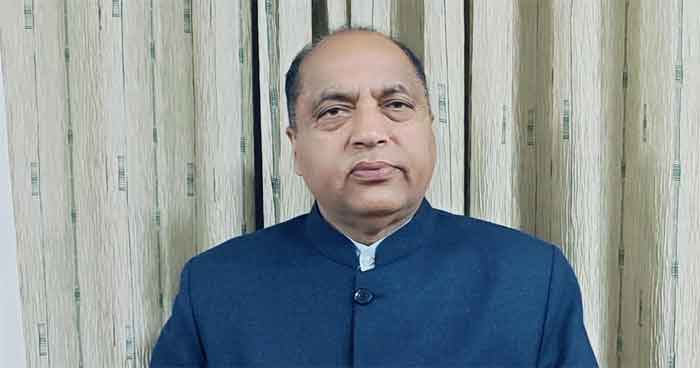
The report was formally released by Chief Minister Sukhvinder Singh Sukhu.
The findings send a clear message: long-term decarbonisation alone is not enough. Rapid reductions in methane and black carbon are crucial to slow near-term warming and improve air quality.
Experts caution that in mountainous regions like Himachal, climate impacts intensify faster and recovery becomes harder.
Transport: The Leading Polluter
Transport remains the largest contributor to nitrogen oxides (NOx) emissions. In 2019 alone, emissions were estimated at 187 kilotonnes annually.
The biggest culprits:
- Diesel-powered commercial vehicles
- Tourist fleets
- Freight transportation
Pollution hotspots include popular hill stations like:
- Shimla
- Manali
- Dharamsala
These tourism hubs collectively host nearly two crore visitors every year, significantly increasing seasonal emission loads.
Industrial Clusters Raising Alarm
Industrial emissions are heavily concentrated in:
- Baddi-Barotiwala-Nalagarh
- Kala Amb
- Parwanoo
Coal and petcoke-based combustion, along with inefficient standalone boilers, are driving higher levels of sulphur dioxide (SO₂), particulate matter, and NOx.
If current patterns continue, industrial growth could significantly undermine the state’s environmental balance.
Glaciers at Risk, Water Security in Danger
One of the most alarming findings relates to black carbon deposition on snow. When soot settles on glaciers, it reduces surface reflectivity, accelerating melting.
This threatens:
- Long-term water security
- River systems downstream
- Increased flash floods
- Landslides
- Glacial lake outburst floods
For a Himalayan ecosystem, these are not distant possibilities — they are growing realities.
Economic Impact: Tourism and Apples Under Pressure
Himachal’s economy is deeply climate-sensitive. Agriculture, horticulture, and tourism form its backbone.
Changing rainfall patterns and rising temperatures are already affecting apple productivity. Crop cycles are shifting, and farmers are feeling the stress.
If pollution continues unchecked, the environmental cost could soon translate into economic loss.
The Urgent Call for Action
The report concludes that strong sub-national policy intervention is essential. Priorities include:
- Cleaner transport systems
- Industrial fuel transition
- Waste management reforms
- Forest fire control
The message is simple yet urgent: Act now — or risk irreversible damage to the Himalayan lifeline.
For a state known for its pristine beauty, the challenge ahead is clear. Development must not come at the cost of the mountains that sustain it.