Himachal Pradesh News
Himachal Pradesh : Free Travel Schemes, Loss-Making Routes and Uneven Competition Behind Mounting HRTC Losses
Himachal Road Transport Corporation’s losses have crossed ₹2,200 crore, driven by loss-making routes, free and concessional travel schemes, and stiff competition from private luxury bus operators.

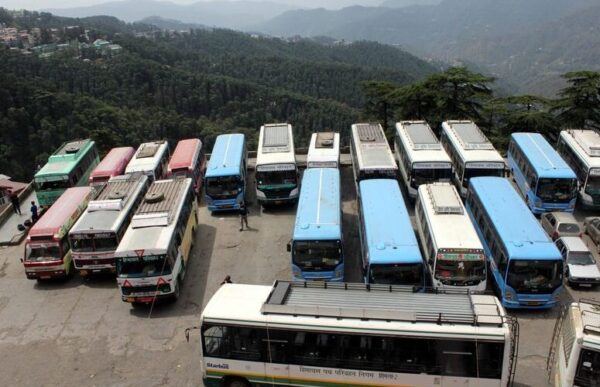
Himachal Road Transport Corporation’s losses have crossed ₹2,200 crore, driven by loss-making routes, free and concessional travel schemes, and stiff competition from private luxury bus operators.
Shimla: The Himachal Road Transport Corporation (HRTC) has emerged as the second highest loss-making public sector undertaking in Himachal Pradesh after the Himachal Pradesh State Electricity Board Limited, with accumulated losses exceeding ₹2,200 crore.
The corporation remains heavily dependent on state government grants to meet salary and pension liabilities.
“Our monthly salary and pension bill is around ₹70 crore — ₹45 crore for salaries and the rest for pensions,” said HRTC Vice-Chairman Ajay Verma. The corporation employs nearly 12,000 personnel and supports about 8,000 pensioners.
Earnings vs Expenditure Gap
HRTC generates approximately ₹70–75 crore per month from its fleet of over 3,000 buses operating within and outside the state. However, its total monthly expenditure stands at nearly ₹150 crore — double its revenue.
The earnings primarily cover diesel, spare parts and other operational costs, leaving salaries and pensions to be met through government grants. According to officials, there is often a ₹10–15 crore gap between the actual requirement and the grant released, further swelling accumulated losses.
Welfare Mandate Over Commercial Logic
Deputy Chief Minister Mukesh Agnihotri, who also holds the transport portfolio, has repeatedly maintained that HRTC should be viewed as a public welfare service rather than a purely commercial enterprise.
During the last Assembly session, he informed the House that nearly 96 per cent of HRTC routes are loss-making. However, many of these routes serve remote and rural areas where HRTC is the only available public transport option, making their discontinuation politically and socially untenable.
Free and Concessional Travel Burden
A major factor behind the mounting losses is the provision of free and concessional travel to 28 categories of passengers, including:
- Schoolchildren
- Persons with disabilities
- Women (50% fare concession)
While some employees argue that the women’s concession scheme improves occupancy levels, it nonetheless reduces fare revenue per passenger.
Competition on Inter-State Routes
HRTC’s Volvo services on inter-state routes remain its primary revenue-generating segment. However, even this segment is under pressure due to competition from privately operated luxury buses.
According to Verma, private operators pay a one-time central tax and operate nationwide, while HRTC cannot impose additional taxes on them within Himachal. Additionally, private buses use dynamic pricing models, adjusting fares based on demand, whereas HRTC follows fixed fare structures.
“This lop-sided competition is hurting us,” Verma said.
Cost-Cutting Measures
To rein in losses, HRTC has:
- Surrendered 390 economically unviable routes
- Clubbed certain services to reduce frequency
- Restricted recruitment by not filling some posts falling vacant due to retirements
Despite these steps, the corporation continues to rely significantly on state support.
The Road Ahead
Balancing its dual role as a welfare provider and a transport utility remains HRTC’s biggest challenge. While its social mandate limits aggressive commercial restructuring, the corporation will need deeper operational reforms, rationalised subsidies and improved revenue models to prevent further financial deterioration.
For now, the burden of sustaining the state’s public transport lifeline continues to rest largely on government grants.