Himachal Pradesh News
Punjab Police arrest two BKI operatives in Nalagarh IED blast case
Punjab Police have arrested two operatives linked to an ISI-backed Babbar Khalsa International (BKI) narco-terror module in connection with the January 1 improvised explosive device (IED) blast near the Nalagarh police station, exposing serious intelligence and preparedness lapses within the local police set-up.

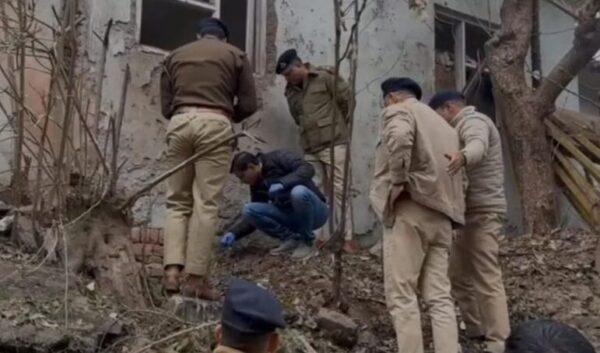
Punjab Police have arrested two operatives linked to an ISI-backed Babbar Khalsa International (BKI) narco-terror module in connection with the January 1 improvised explosive device (IED) blast near the Nalagarh police station, exposing serious intelligence and preparedness lapses within the local police set-up.
The accused — Shamsher Singh alias Sheru alias Kamal and Pardeep Singh alias Deepu, both residents of Rahon in SBS Nagar district of Punjab — were apprehended on Friday evening. An IED was also recovered from their possession.
Investigators said the duo acted on the instructions of Shushant Chopra, a close associate of Gurpreet alias Gopi Nawanshahria and BKI mastermind Harwinder Rinda.
IED transported from Punjab
Preliminary investigations revealed that on December 31, 2025, the accused, along with two accomplices, allegedly transported the explosive device from Punjab to Himachal Pradesh as part of a larger conspiracy to target police establishments.
Despite the gravity of the attack, the Nalagarh police reportedly had little actionable intelligence about the module or its local support network even weeks after the blast, relying largely on Punjab Police and central agencies for leads.
The IED had been planted at the entrance of the police station itself, underscoring both the attackers’ planning and apparent surveillance failures. The absence of CCTV coverage further hampered the investigation, leaving authorities without visual evidence.
Security concerns raised
Baddi Superintendent of Police Vinod Dhiman said transit remand of the arrested accused would be sought from Nawanshahr police. He added that security measures had been intensified with enhanced patrolling, night searches and increased police presence.
However, the incident has raised concerns over intelligence gathering and counter-terror preparedness in Nalagarh, a sensitive industrial belt located close to the Punjab border.
Sources indicated that blast-mitigation measures remain inadequate and inter-agency coordination needs strengthening. Limited surveillance of anti-social elements and weak human intelligence networks also emerged as key shortcomings.
Need for stronger coordination
While Punjab Police said the operation was conducted in coordination with Himachal Pradesh Police and central agencies, including the NIA and IB, local authorities were unable to independently identify the perpetrators or their support structures even a month after the blast.
With international terror linkages now surfacing, the case highlights the urgent need to strengthen intelligence mechanisms, improve community policing and enhance inter-agency cooperation to prevent similar threats in the future.