News
WFP Chief Says Modest Increase in Food Aid Still Not Enough to Prevent Famine in Gaza

Updated At : 12:30 PM Aug 29, 2025 IST
The head of the World Food Programme (WFP) said on Thursday that while more food aid is reaching Gaza, it remains insufficient to avert widespread famine.
“We are getting a little more food in. We’re moving in the right direction… but it’s not nearly enough to ensure people are not malnourished and hungry,” WFP Executive Director Cindy McCain told Reuters in an interview from Jerusalem via video link.
McCain said the agency is currently managing to deliver about 100 aid trucks a day into Gaza. During a two-month truce that ended in mid-March, the figure was closer to 600 trucks per day.
Israel’s military liaison branch COGAT, which oversees aid access, said in a joint statement with the army that more than 300 humanitarian trucks enter Gaza daily, most of them carrying food.
McCain also met with Israeli Prime Minister Benjamin Netanyahu in Jerusalem. His office said both agreed to intensify efforts to speed up and sustain the flow of humanitarian supplies into Gaza in light of urgent needs on the ground.
According to a report released Friday by the Integrated Food Security Phase Classification (IPC), a global hunger monitoring body, nearly 514,000 people—around one-quarter of Gaza’s population—are facing famine conditions in Gaza City and surrounding areas.
Israel has repeatedly dismissed such findings as false and biased in favor of Hamas, against whom it has been waging war for nearly two years.
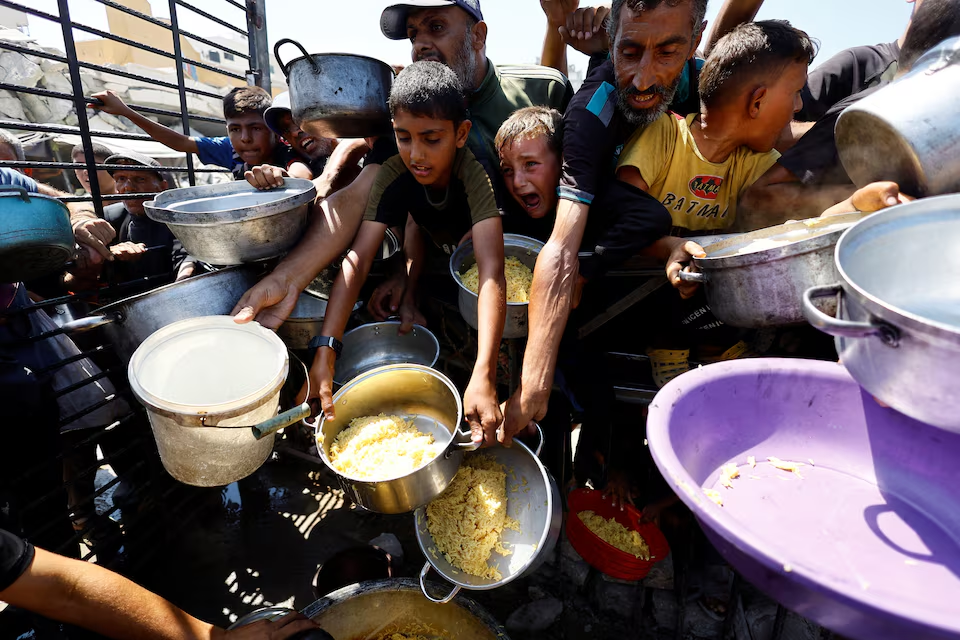
At a soup kitchen in Gaza City, 52-year-old Sami al-Ashram told Reuters he barely has enough to eat.
“I call on those in charge of aid to increase supplies so we can eat and survive… a little rice is not enough for us,” he said.
‘Total Devastation’
During a visit this week to Deir al-Balah and Khan Younis, including a clinic for children and pregnant and breastfeeding women, McCain highlighted the difficulties of reaching vulnerable populations deeper inside Gaza.
“What we saw was total devastation. It’s completely destroyed, and we saw people who were very seriously hungry and malnourished,” she said.
“This confirmed to me that we need to go deeper into Gaza to make sure people are getting what they need on a continuous basis,” she added.
McCain noted that while a slight improvement in the availability of commercial food and supplies has led to lower prices, most people still cannot afford to buy food.
She expressed hope that after meeting Israel’s military chief of staff, Lt. Gen. Herzi Halevi, on Wednesday, WFP will gain better access into Gaza. In that meeting, she pressed for uninterrupted access, safer routes, and assurances that trucks would not face long delays even after being cleared.
In a statement, the Israeli military said Halevi reaffirmed Israel’s commitment to preventing famine and ensuring humanitarian aid reaches Gaza’s residents.
The IPC report also warned that famine could spread by the end of September to the central and southern districts of Deir al-Balah and Khan Younis. McCain described IPC’s methodology as the “gold standard” for measuring food insecurity.
Israel, however, rejected the report as “highly flawed” and on Wednesday called on IPC to withdraw it. IPC has not yet commented.