Shimla News
Government and private institutions in rural areas will have to pay for water as metering begins
The Himachal Pradesh government has decided to end the free water scheme for rural areas, announcing that both government and private institutions will now have to pay for water usage based on consumption. The Jal Shakti department has begun installing water meters in these institutions, marking the beginning of a more regulated water billing system.

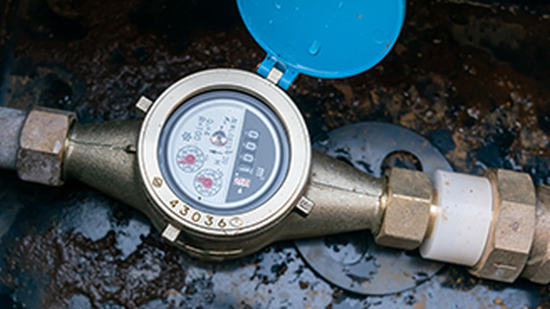
The Himachal Pradesh government has decided to end the free water scheme for rural areas, announcing that both government and private institutions will now have to pay for water usage based on consumption. The Jal Shakti department has begun installing water meters in these institutions, marking the beginning of a more regulated water billing system.
Under the new policy, institutions consuming up to 20,000 litres of water will be charged ₹19.30 per thousand litres. The rates will increase progressively, to ₹33.28 per thousand litres for 20,000 to 30,000 litres, ₹59.90 per thousand litres for 30,000 to 50,000 litres, ₹106.30 per thousand litres for 50,000 to 100,000 litres and ₹150 per thousand litres for consumption above 100,000 litres.
The change applies to various institutions, including government offices, schools, hospitals, dharamshalas, religious establishments, dhabas, shops, washing centres, homestays, private hospitals, private schools, restaurants and small hotels. These establishments, which earlier availed free water, will now be billed as per their actual usage.
The move is part of an effort to bring accountability in water usage, as many institutions were found using water from domestic connections without any restriction under the earlier scheme. The Jal Shakti department did not have any system to monitor consumption, resulting in irregular use of water and no financial benefit to the government.
Suresh Mahajan, chief engineer of the Jal Shakti department in Kangra, confirmed that metering work will begin across the district soon. “We are starting the process of installing meters in all government and private institutions to properly monitor water usage. Bills will be generated based on consumption, which will ensure that water is used responsibly,” Mahajan said.
The previous government’s free water scheme allowed rural institutions to use water at no cost, leading to uncontrolled consumption. The new metering system is expected to generate revenue for the government that will be deposited directly into the treasury. The initiative is expected to cover hundreds of institutions in both urban and rural areas, improve water management and contribute to state finances.